
Sanitation is one of the most important aspects of providing pedicure services. Proper cleaning and disinfection of foot spas are essential for protecting clients, maintaining compliance with state regulations, and ensuring a professional working environment.
Understanding how different pedicure systems are cleaned — and how much time and effort they require — helps salon owners, nail technicians, spa operators, and beauty schools make informed decisions when selecting equipment.
This guide outlines general sanitation principles, common procedures, and key differences between system types.
Why Sanitation Matters
Pedicure services involve direct contact with skin and water, which makes sanitation critical.
Proper sanitation helps:
- Prevent cross-contamination between clients
- Maintain compliance with state board regulations
- Protect the reputation of the salon
- Create a safer and more comfortable experience for clients
Even small gaps in cleaning procedures can lead to hygiene concerns or regulatory issues.
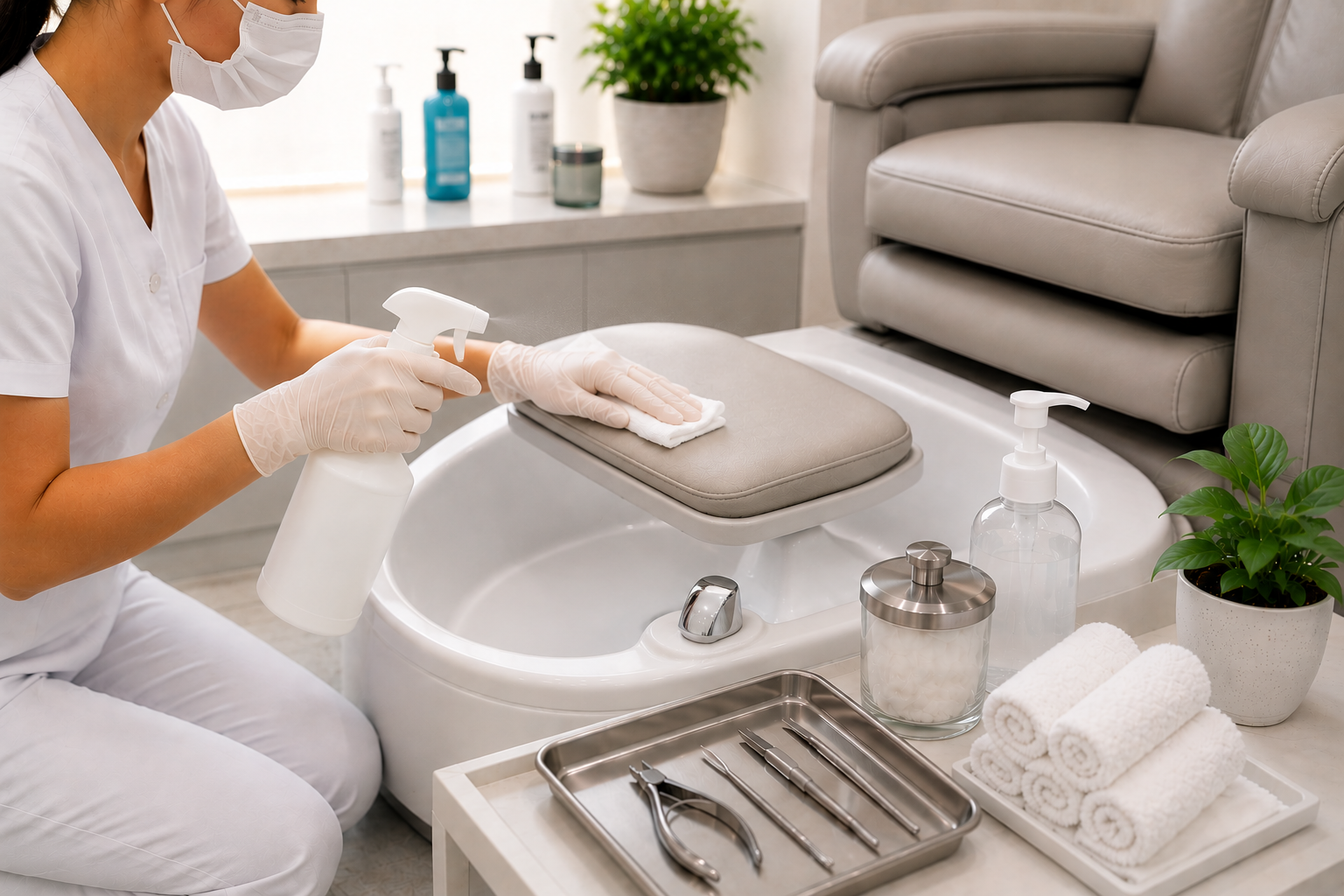
General Sanitation Requirements (U.S.)
While regulations vary by state, most follow similar principles.
Typical requirements include:
- Cleaning and disinfecting the basin after each client
- Using approved disinfectants
- Allowing proper contact time for disinfectants to work effectively
- Removing visible debris before disinfection
- Keeping records or logs of cleaning procedures (in some states)
Many state boards provide detailed step-by-step requirements that salons must follow.
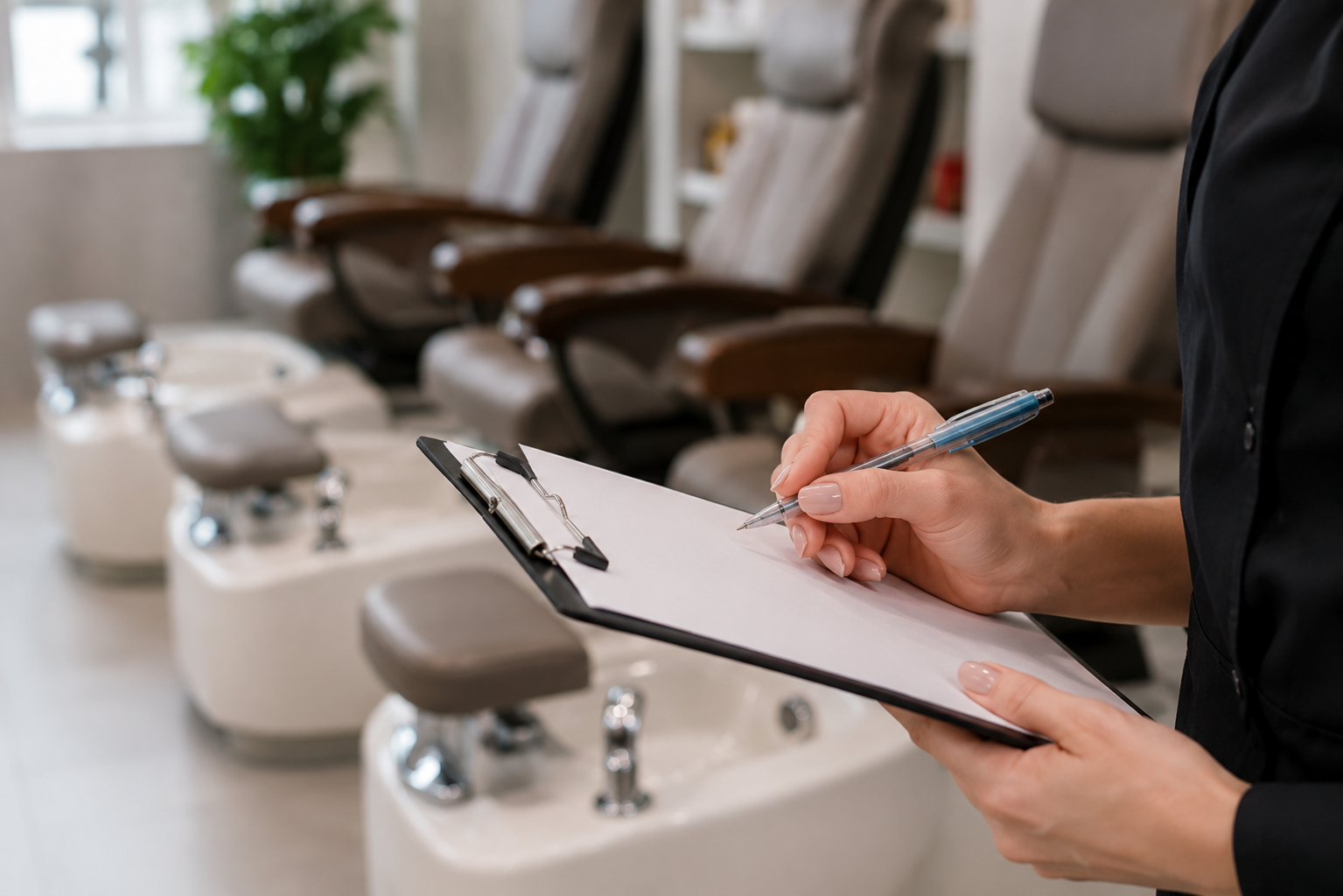
Typical Cleaning Procedure
Although procedures vary depending on the system, a general cleaning process often includes:
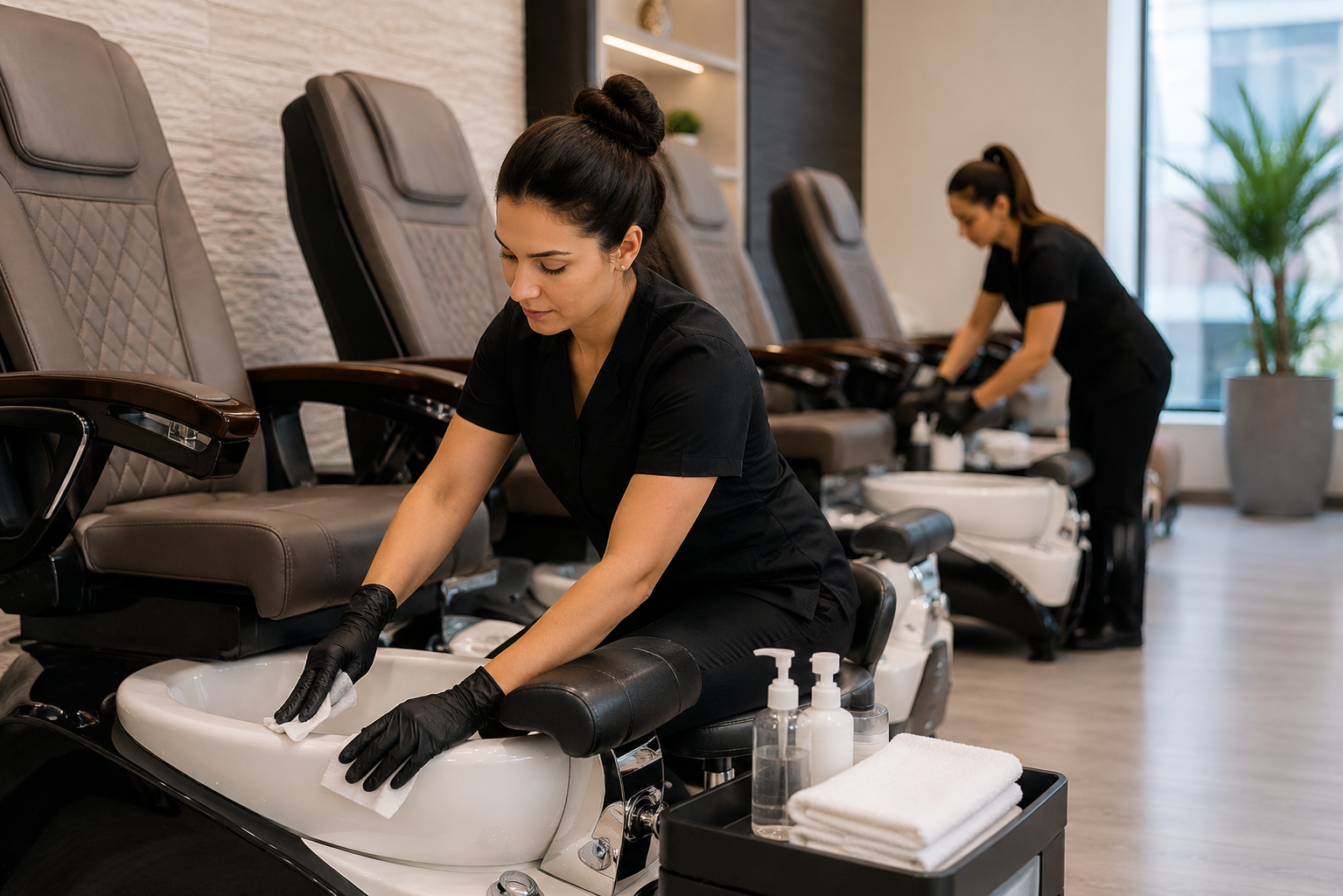
- Drain the used water
- Remove any visible debris
- Clean surfaces with detergent or soap
- Apply disinfectant approved for salon use
- Fill the basin with disinfectant approved for salon use, bringing the solution up to the rim to ensure full coverage
- Rinse and prepare for the next client
For systems with internal components, additional steps may be required.
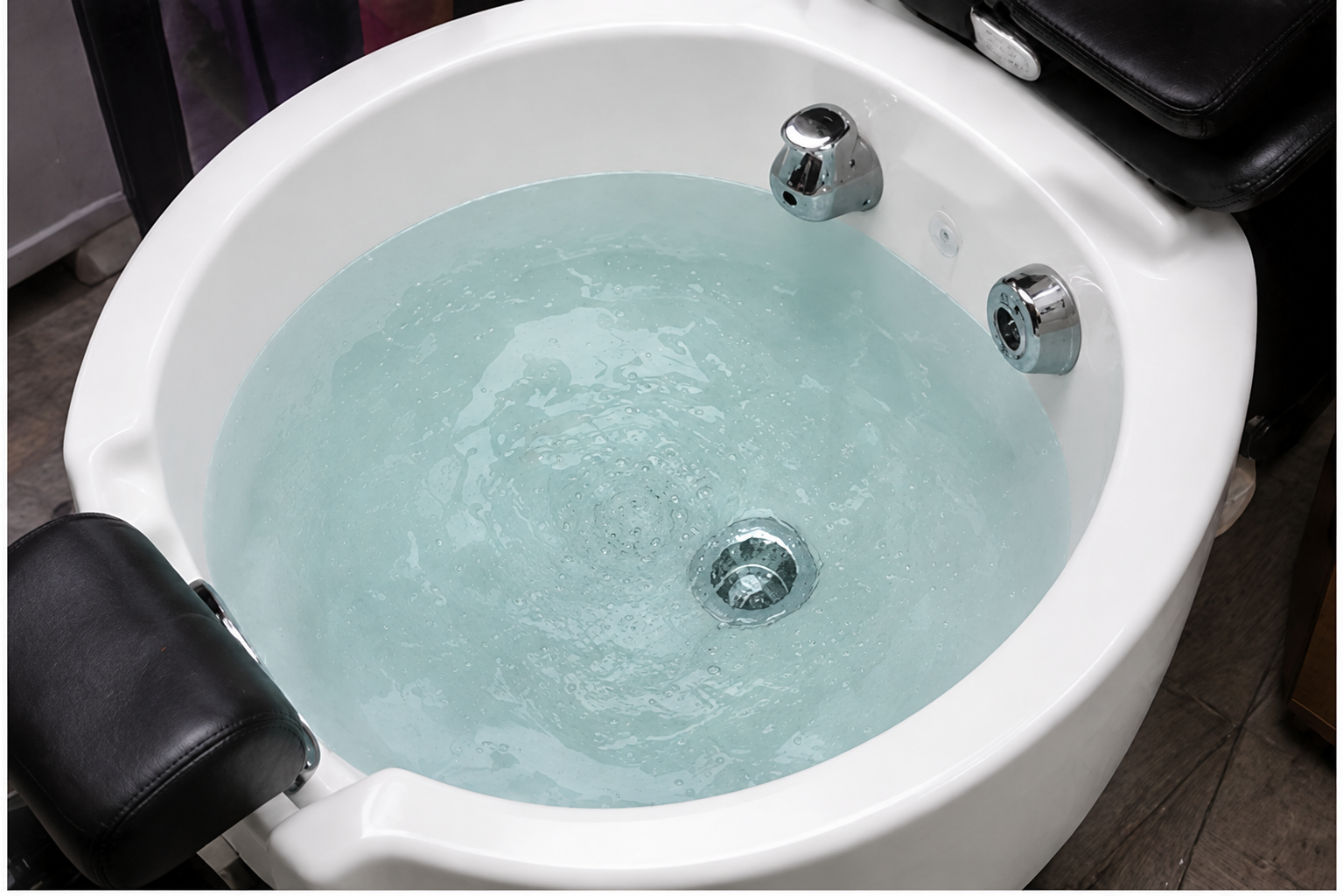
Jet Systems vs Non-Jet Systems
One of the most important sanitation differences comes from how the pedicure system is designed.
Jet / Whirlpool Systems
- Contain internal pipes and components
- Require flushing and cleaning of internal parts
- May require disassembly or removal of parts
- Typically involve longer cleaning time between clients
Non-Jet / Removable Basin Systems
- Fewer internal components
- Easier access to all surfaces
- Simplified cleaning procedures
- More consistent sanitation process
Understanding these differences is important when evaluating daily operations.
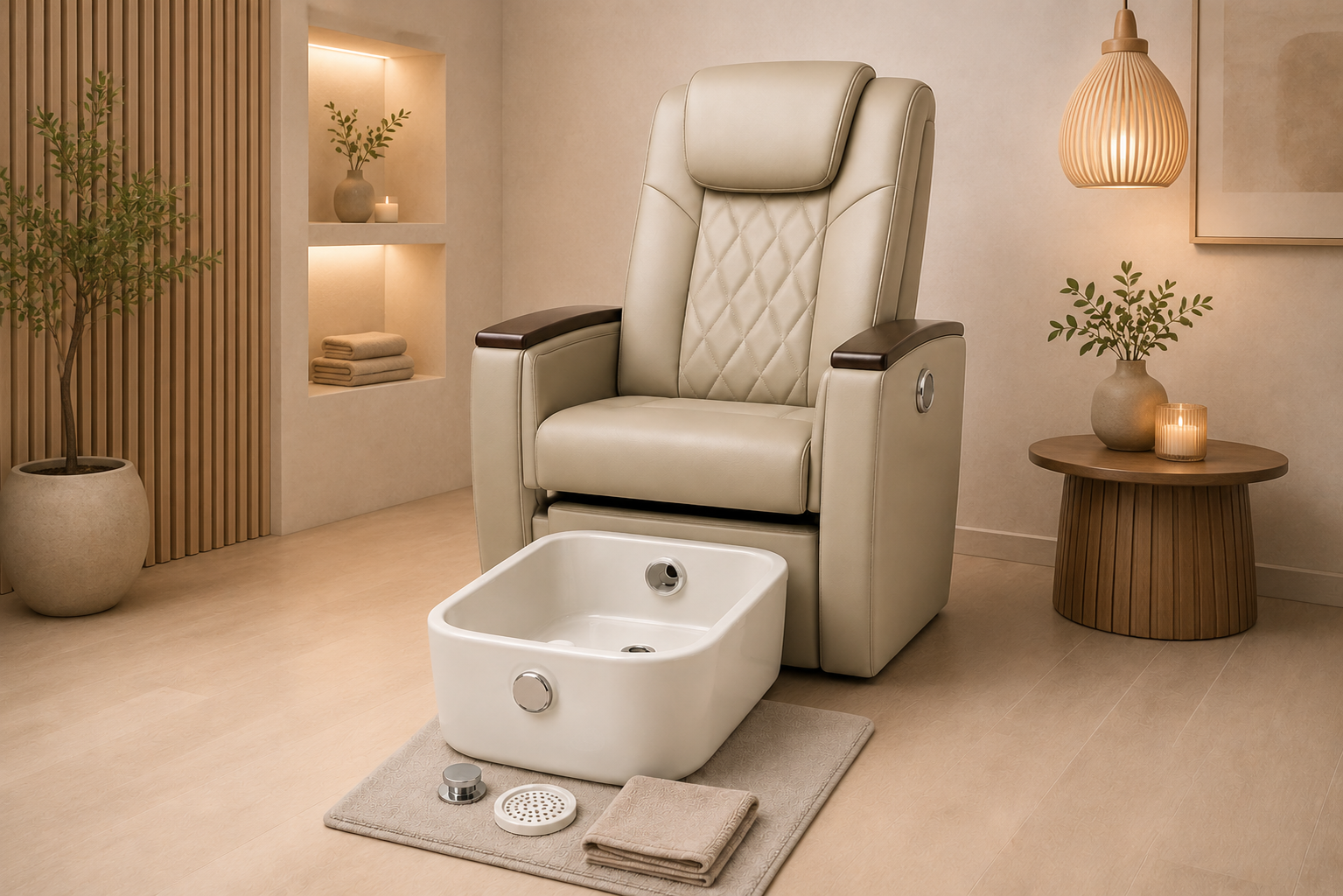
Disposable Liners and Sanitation
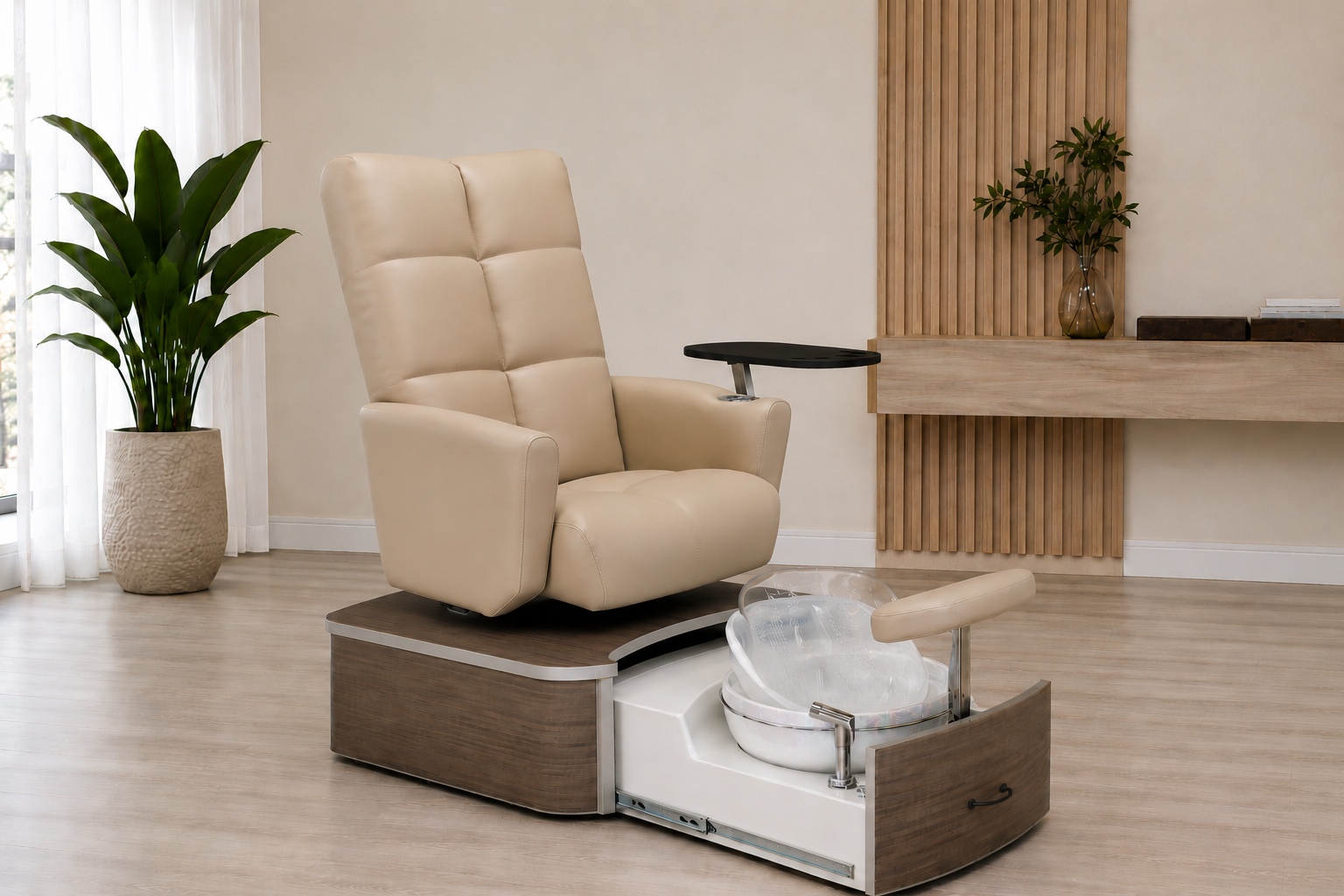
Many modern pedicure systems use disposable liners.
Disposable liners:
- Create a barrier between the client and the basin
- Reduce direct skin contact with previously used tub surfaces, particularly in high-volume environments where cleaning time between clients may be limited
- Simplify cleaning procedures
- Help maintain consistent sanitation standards
While liners do not replace cleaning requirements, they can significantly reduce cleaning time and complexity.
Time and Operational Impact
Sanitation is not only about compliance — it also affects workflow.
More complex systems may:
- Increase preparation time between clients
- Require additional staff effort
- Slow down daily operations
Simpler systems may:
- Reduce turnaround time
- Improve scheduling efficiency
- Provide more consistent service flow
This is an important consideration for both small salons and high-volume environments.
Common Sanitation Mistakes
Some common issues seen in practice include:
- Not allowing proper disinfectant contact time
- Skipping steps between clients
- Improper cleaning of internal components
- Using incompatible cleaning chemicals
- Relying on visual cleanliness instead of proper disinfection
Avoiding these mistakes helps maintain both compliance and client trust.
State Board Considerations
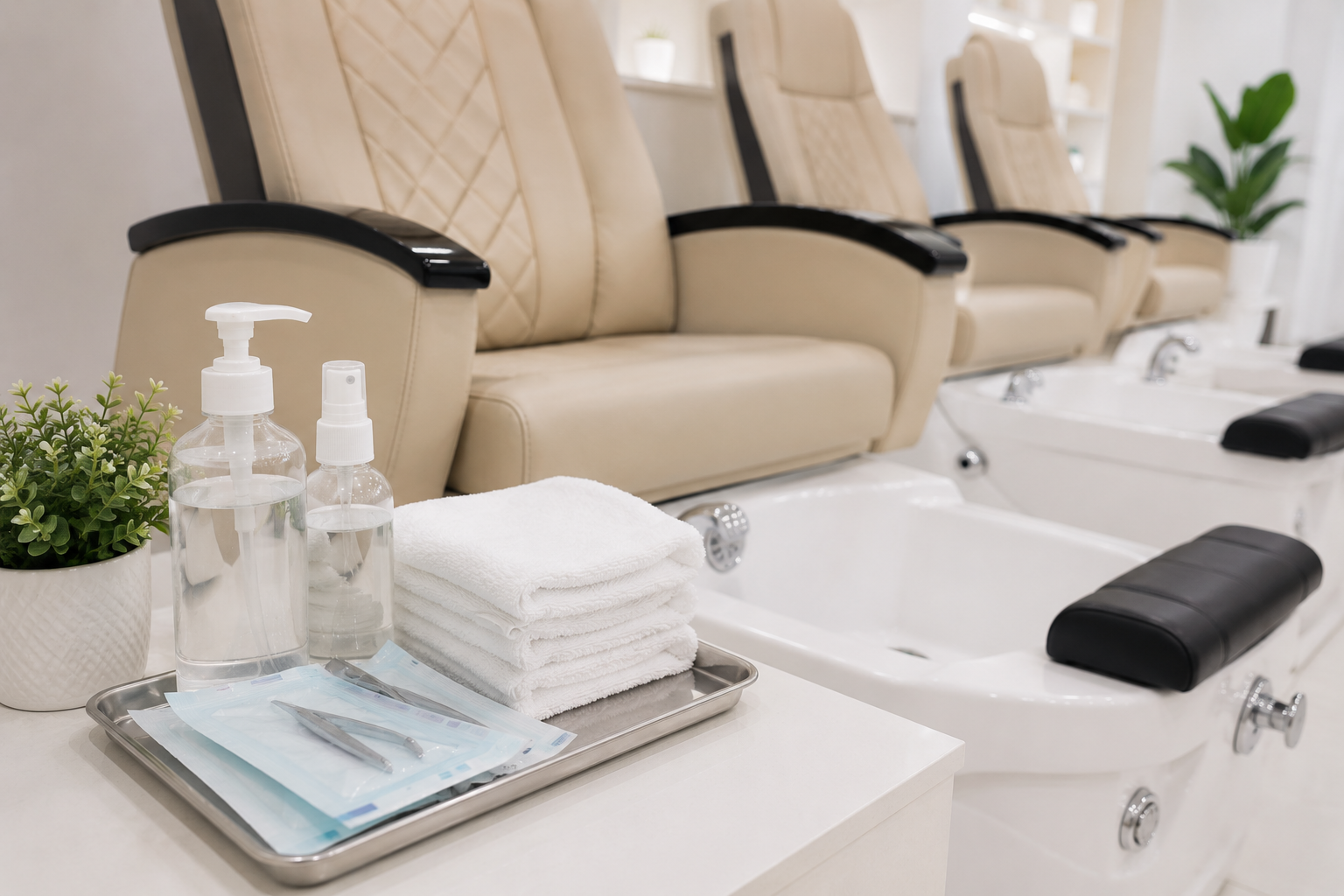
Each state may have specific requirements for pedicure spa sanitation.
For example, some states:
- Require detailed cleaning procedures
- Specify disinfectant types
- Require cleaning logs
- Provide guidelines for jet system maintenance
It is important to review your state board regulations and ensure your procedures meet those standards.
Daily Logs and Compliance
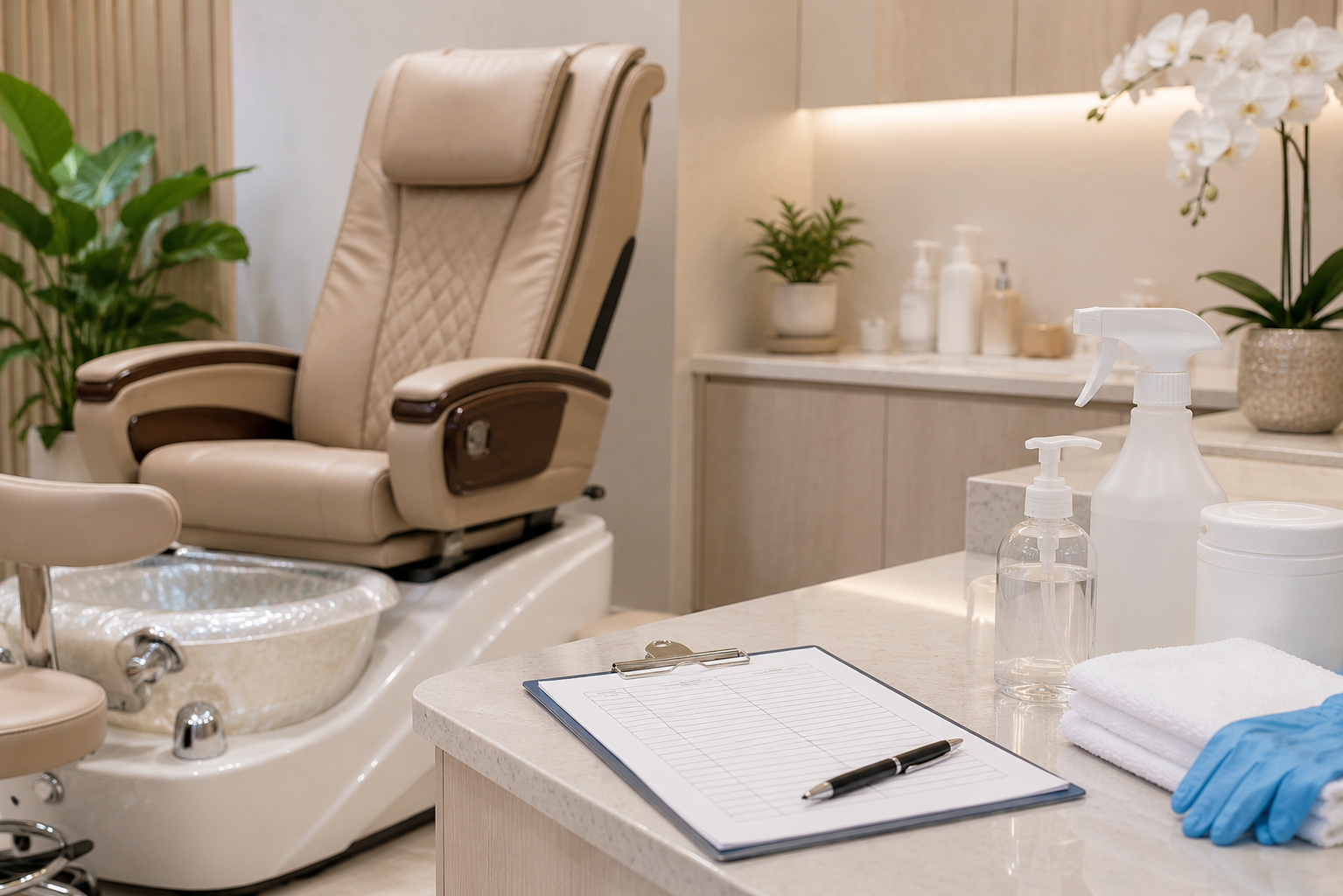
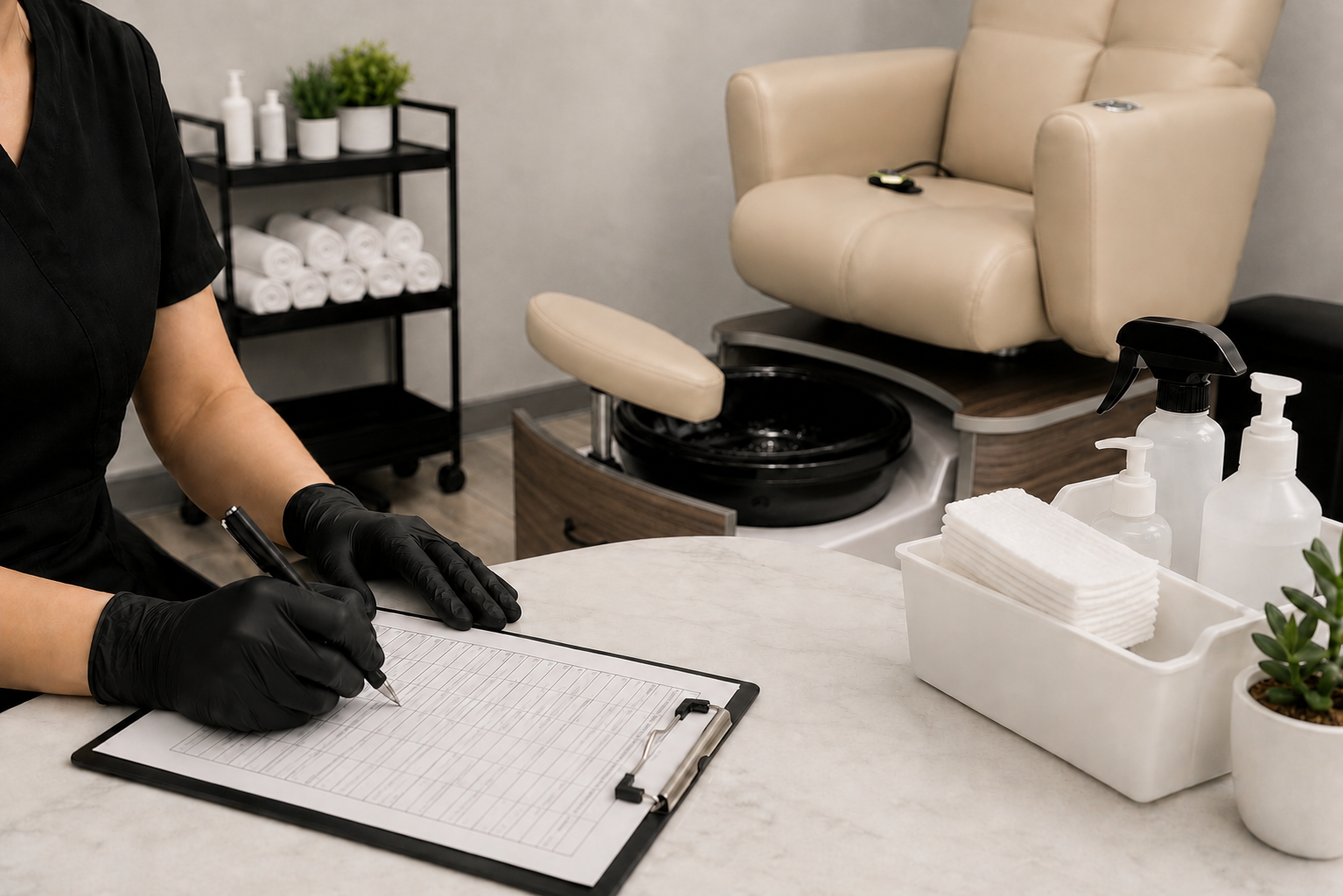
Some salons maintain cleaning logs to document sanitation procedures.
Logs may include:
- Date and time of cleaning
- Technician initials
- Type of cleaning performed
- Notes on maintenance or issues
- Changing liners between each client when using a disposable liner system
Maintaining a log can help:
- Demonstrate compliance during inspections
- Create accountability
- Standardize procedures across staff
Final Thoughts
Foot spa sanitation is a critical part of operating a professional nail salon or spa. The type of pedicure system used can significantly affect how easy it is to maintain proper sanitation and how much time is required between clients.
By understanding cleaning procedures, system differences, and regulatory expectations, salon owners and technicians can choose solutions that support both hygiene and efficient operation.