
Understanding plumbing is an important part of selecting and installing a pedicure chair. Plumbing affects installation cost, salon layout, long-term maintenance, and how easily the system can be serviced over time.
This guide explains how plumbing works in pedicure chair installations, what salon owners should consider before choosing a system, and how plumbing design can affect daily operation, sanitation, and future flexibility.
For a broader comparison of systems, see Plumbed vs Non-Plumbed Pedicure Chairs.
What Plumbing Means in a Pedicure Chair Setup
In a plumbed pedicure chair system, the chair connects directly to the building’s water supply and drainage lines. This allows water to flow into the basin and drain out through fixed plumbing connections during service.
Depending on the chair design, plumbing may support:
- Hot and cold water supply
- Drainage from the basin
- Jet or whirlpool operation
- Other integrated chair features, depending on the model
Because plumbing connections are fixed, this type of installation is typically intended for a more permanent salon layout.
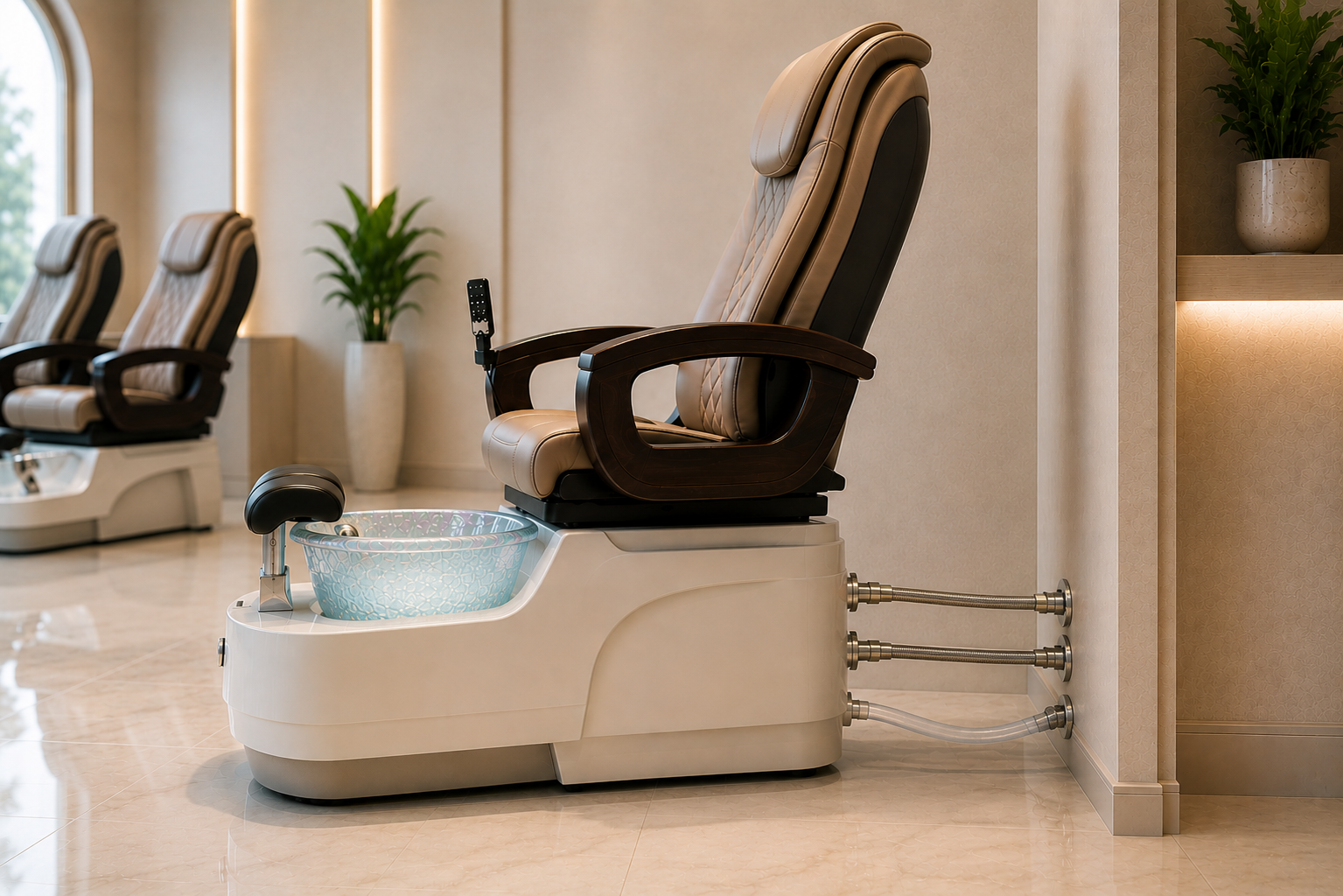
Basic Plumbing Components
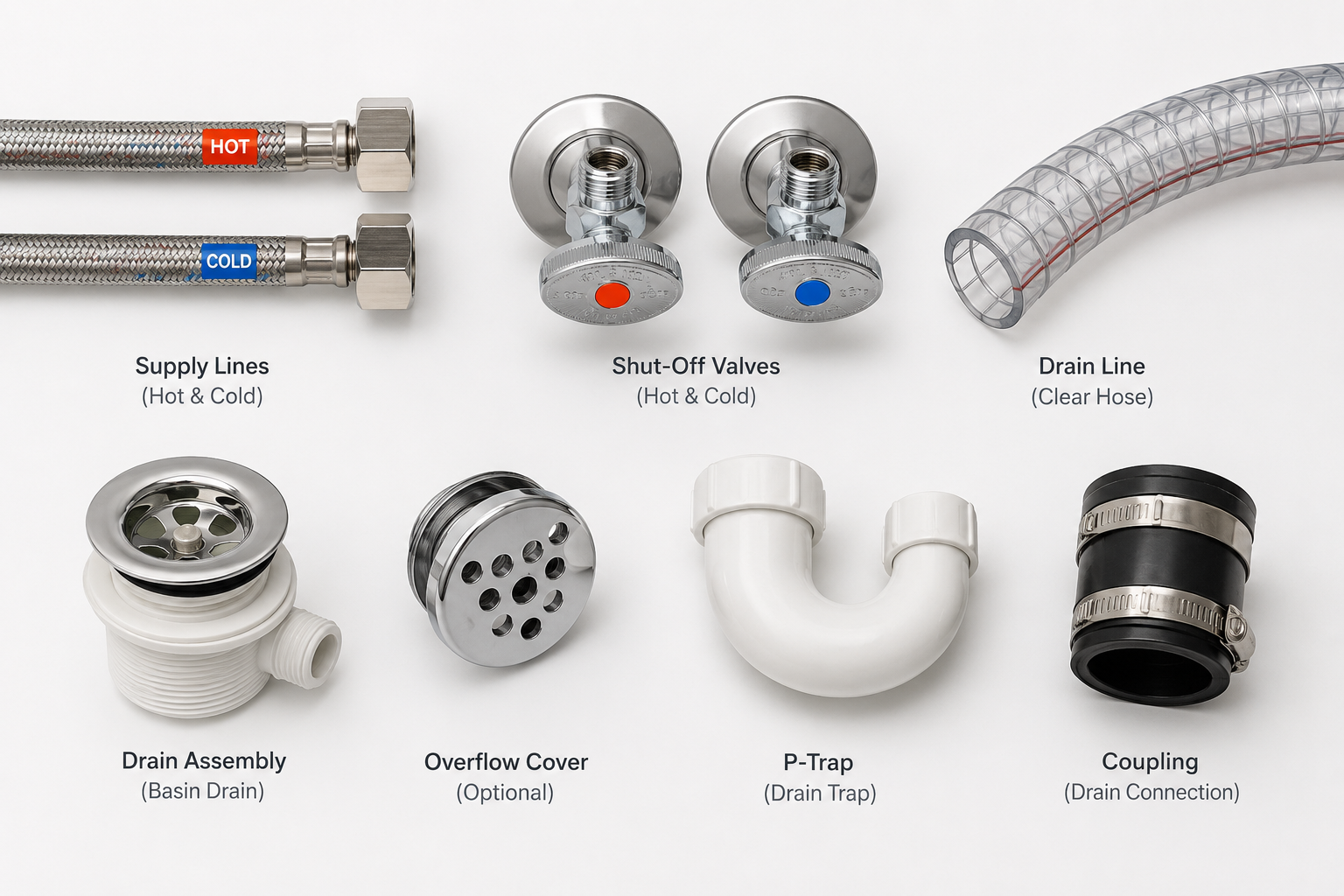
Pedicure chair plumbing usually involves several core elements:
- Hot water supply line
- Cold water supply line
- Drain line
- Shut-off valves
- Trap or drainage connection, depending on local code and installation method
In many modern salon installations, chairs connect to existing wall plumbing using standpipe-style drainage, which can simplify installation when compatible with local code requirements.
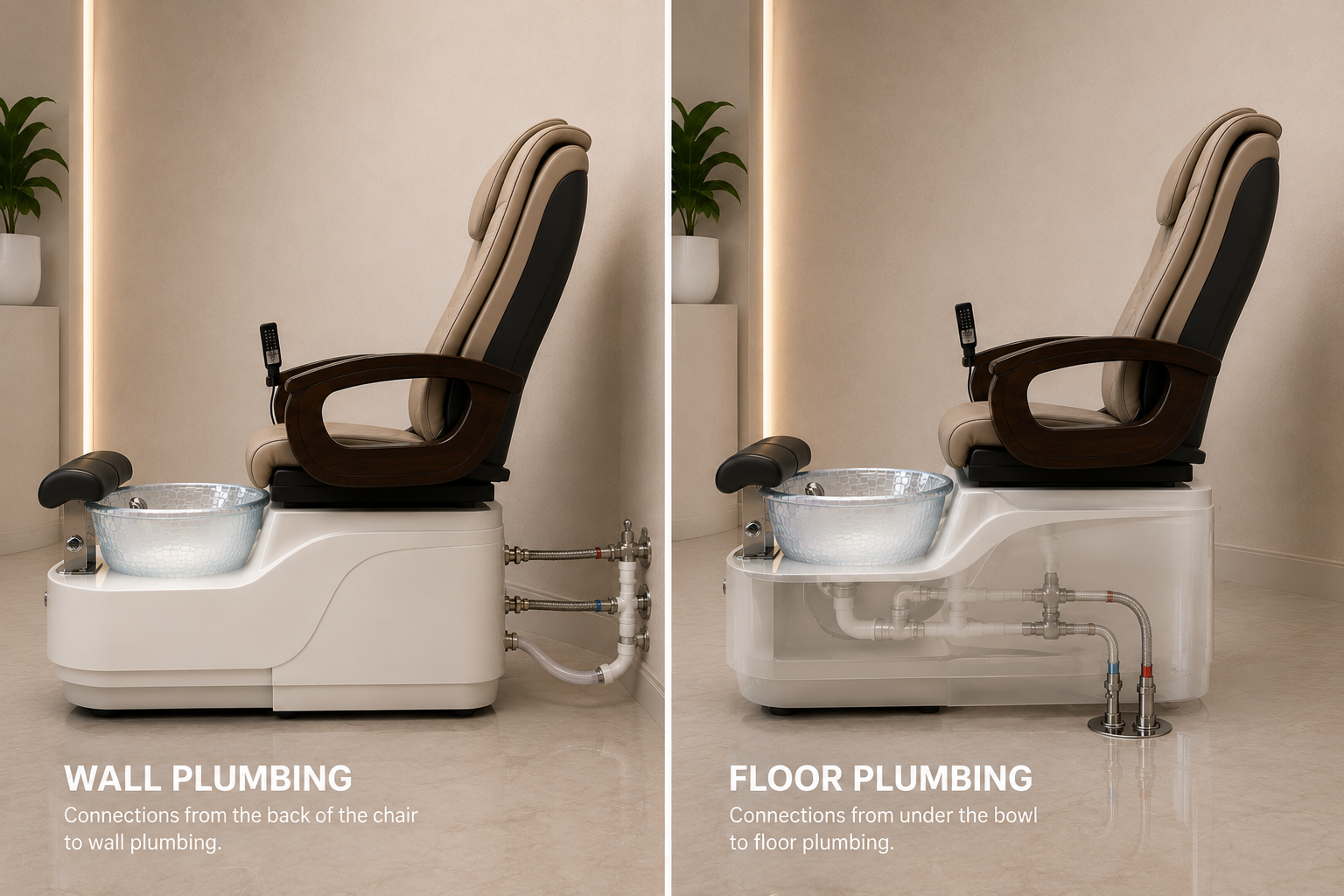
Wall Plumbing vs Floor Plumbing
Wall Plumbing
Wall plumbing is often used when water supply and drainage lines are already available along the wall behind the station. In many modern salon installations, this can simplify setup and reduce the need for cutting into the floor.
Exposed plumbing connections can be concealed using a built-in rear deck or decorative paneling, helping maintain a clean and visually integrated salon design.
Floor Plumbing
Floor plumbing may be required in some layouts, especially in older salon designs or where existing utility lines are not positioned conveniently. This type of installation can require more construction work and may increase cost.
The best option depends on the building, local plumbing code, and the pedicure chair system being installed.
Plumbing and Salon Layout
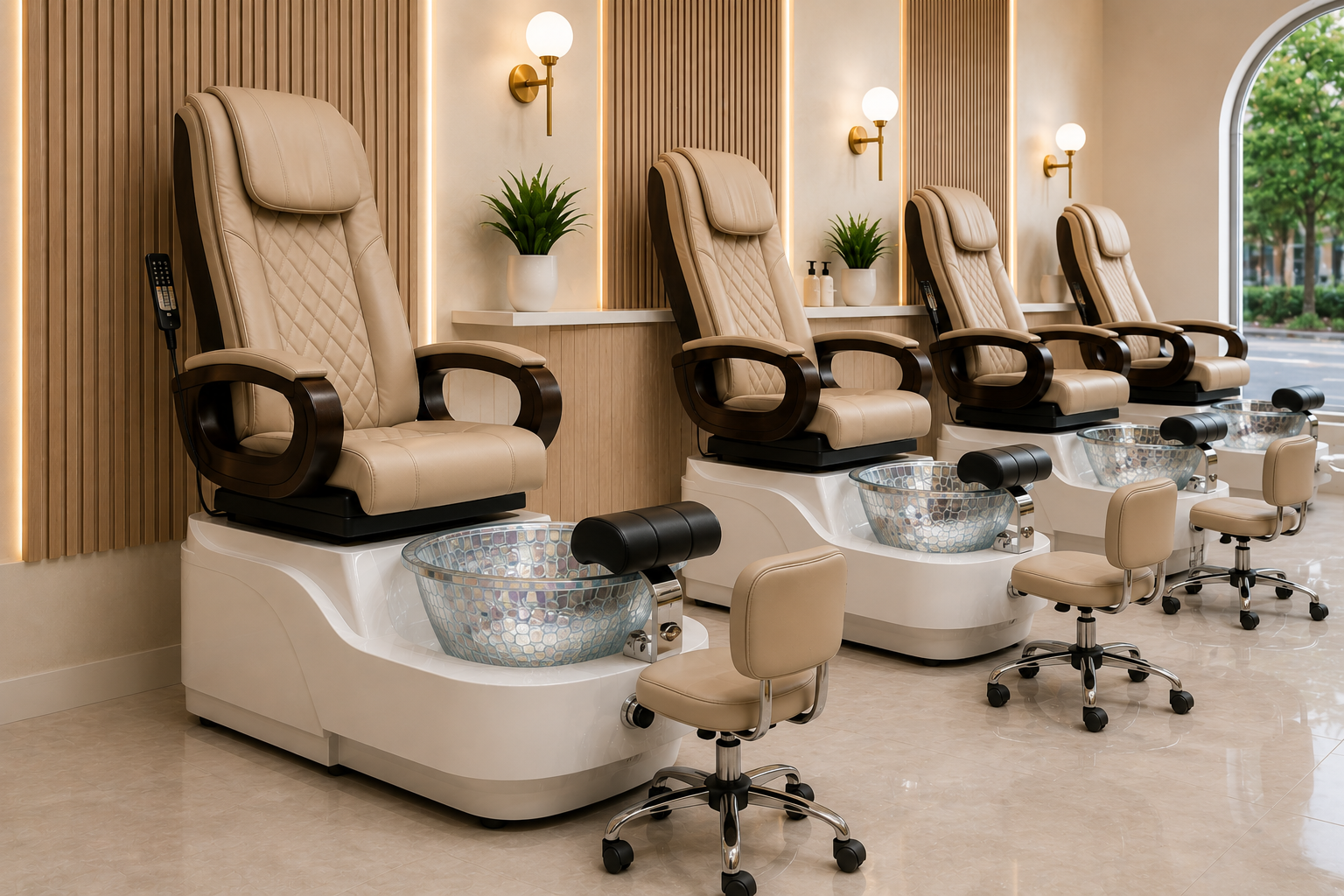
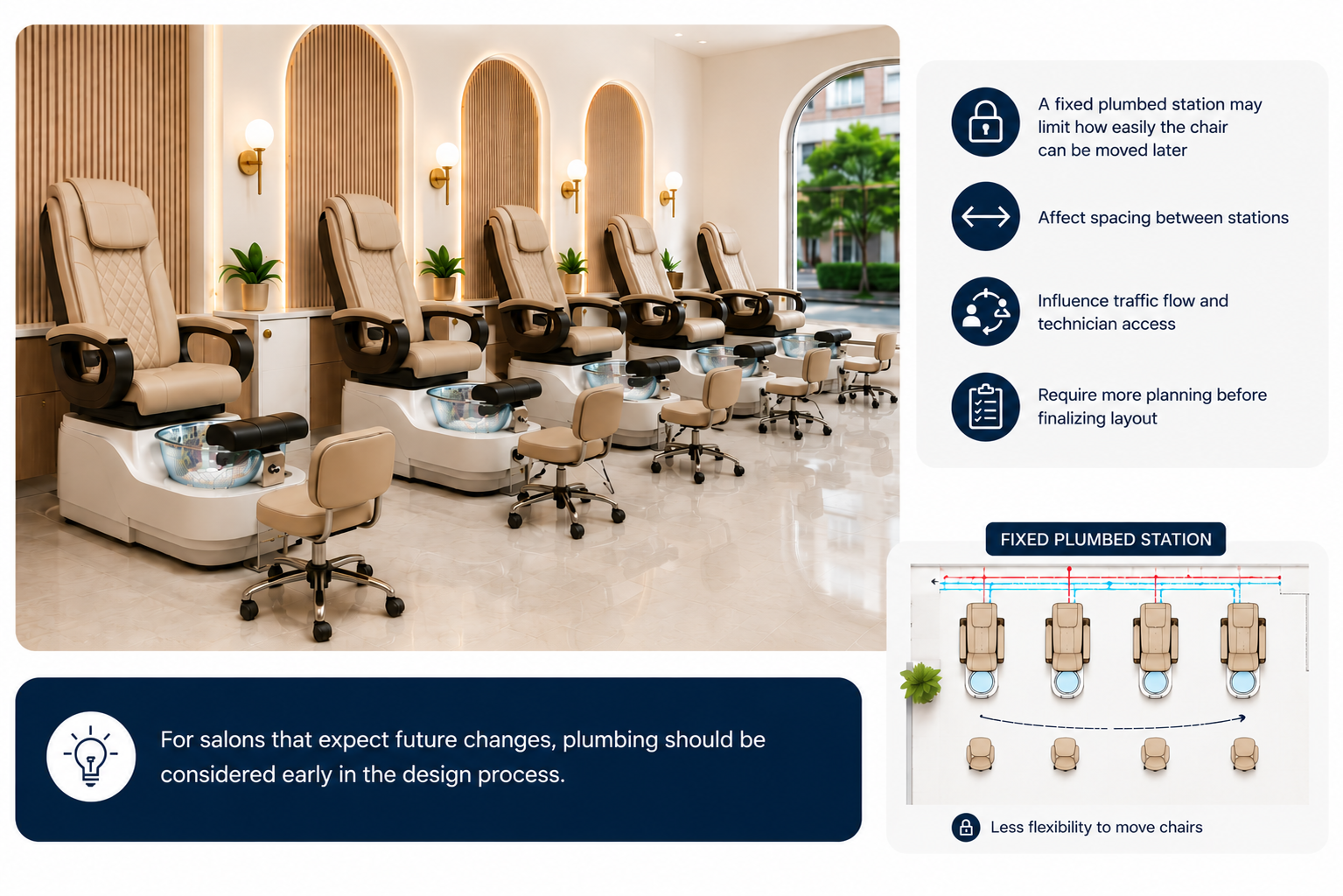
Plumbing directly affects where pedicure chairs can be placed and how flexible your salon layout will be in the future.
A fixed plumbed station may:
- Limit how easily the chair can be moved later
- Affect spacing between stations
- Influence traffic flow and technician access
- Require more planning before finalizing layout
For salons that expect future changes, plumbing should be considered early in the design process.
Plumbing and Sanitation
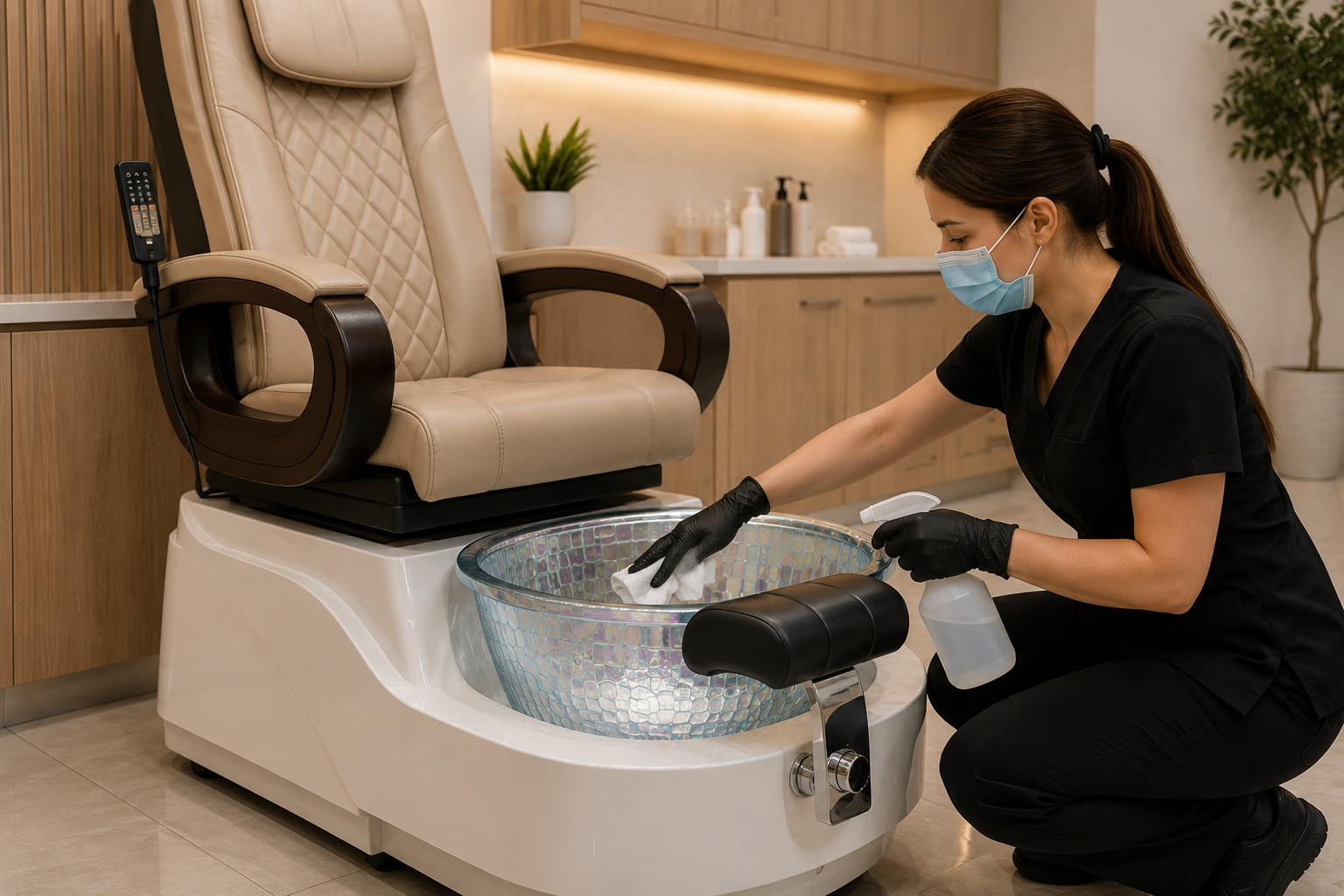
Plumbing design can also affect sanitation and maintenance.
Systems with internal pipes, jets, or more complex water pathways may:
- Require more thorough cleaning
- Take longer to sanitize between clients
- Increase maintenance demands over time
This is one reason many salon owners compare plumbing needs together with sanitation procedures before selecting a pedicure system.
See also: Foot Spa Sanitation Rules
Plumbing and Maintenance
Plumbing is not just an installation issue — it affects long-term service and maintenance as well.
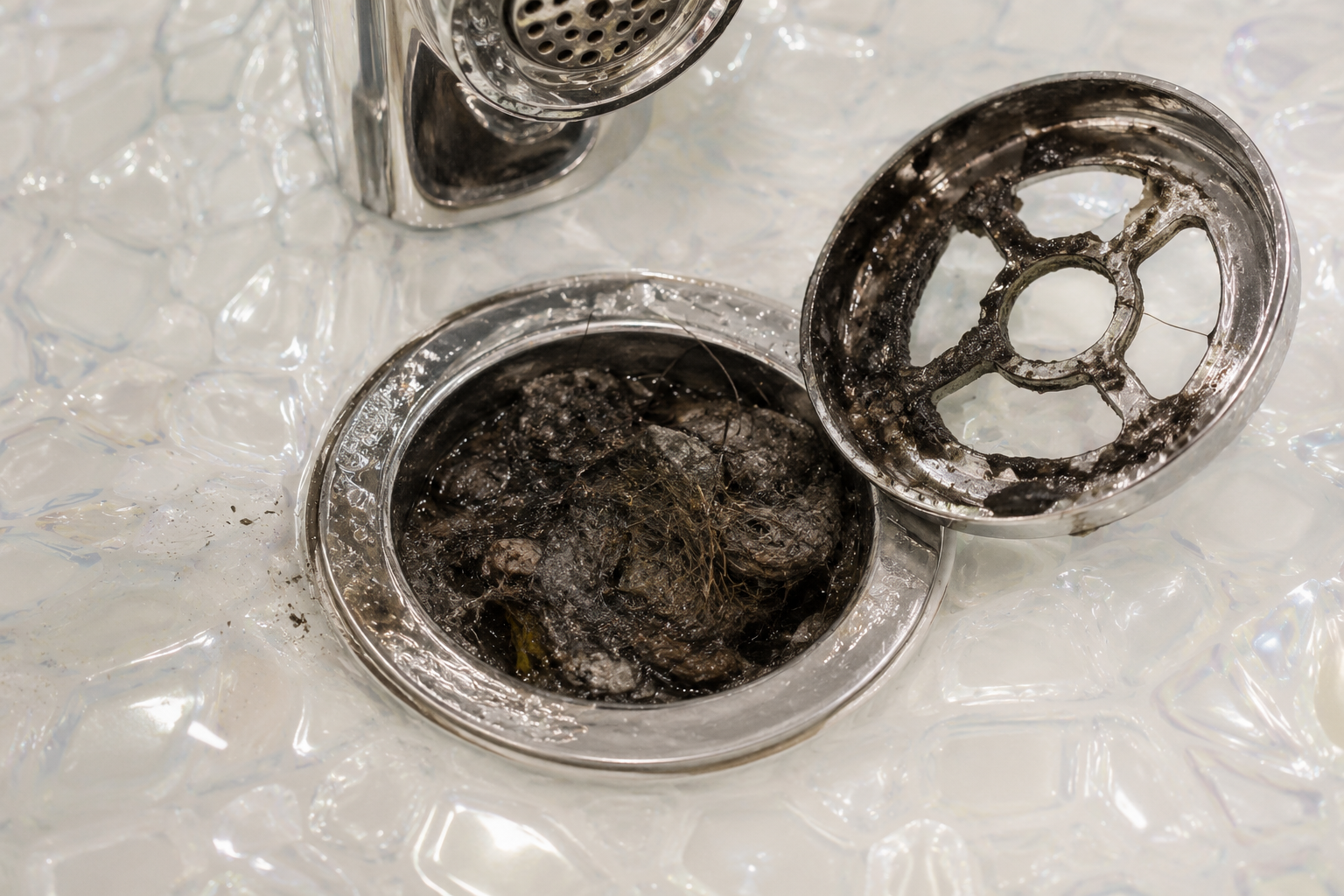
Possible maintenance concerns may include:
- Drain clogs
- Leaks
- Valve replacement
- Pump or jet servicing, if applicable
- Access to plumbing connections for repairs
A simpler plumbing design can reduce maintenance complexity and make future service easier.
When Plumbed Systems Make Sense
Plumbed pedicure chair systems may be a good fit when:
- The salon already has plumbing infrastructure in place
- A permanent layout is planned
- The owner wants continuous water flow during service
- The location is stable and long-term
- The business is prepared for installation and maintenance requirements
In the right environment, plumbed systems can work well and provide a traditional spa-style setup.
When Plumbing Complexity May Be a Concern
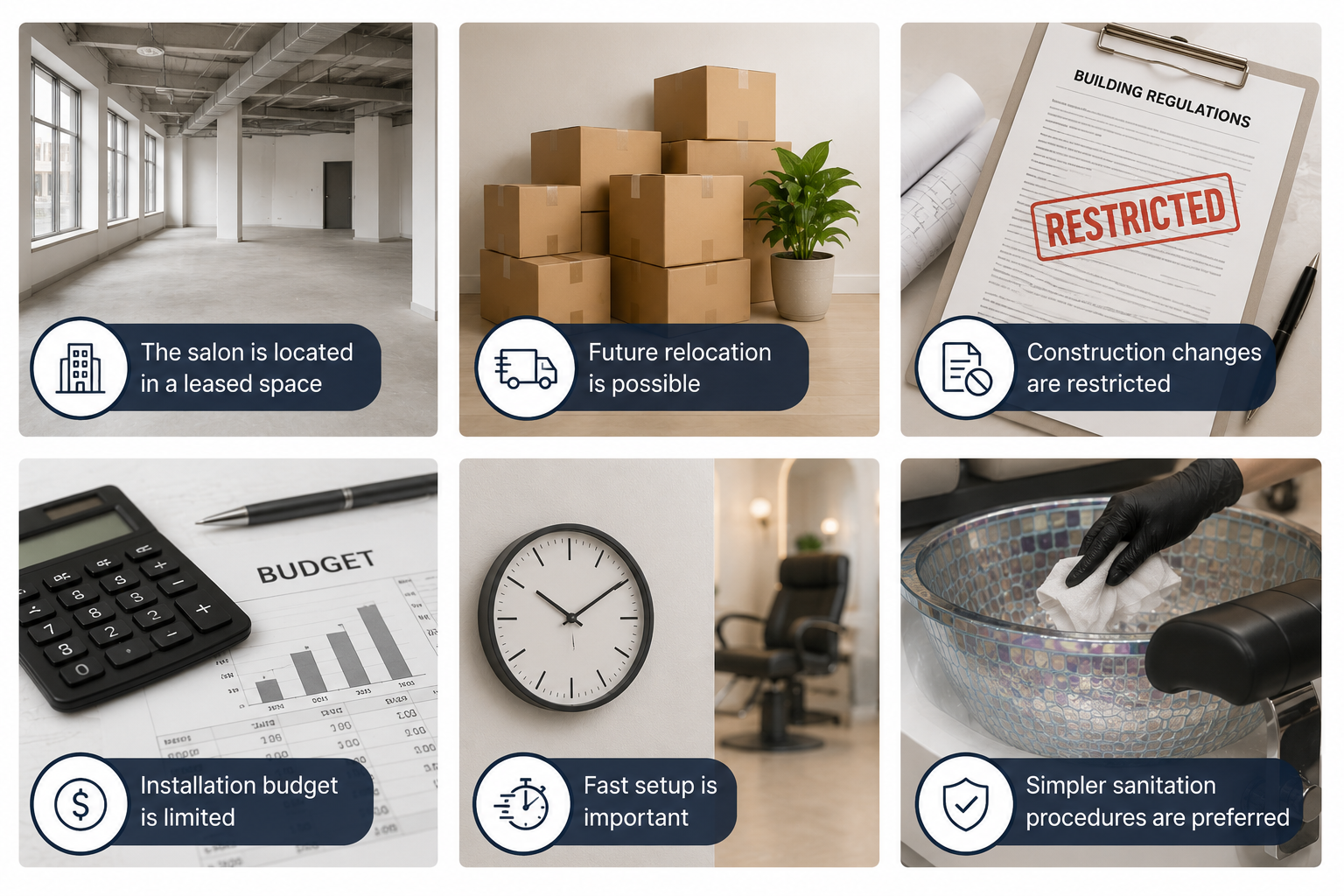
Plumbing complexity may be a concern when:
- The salon is located in a leased space
- Future relocation is possible
- Construction changes are restricted
- Installation budget is limited
- Fast setup is important
- Simpler sanitation procedures are preferred
In these situations, salon owners often compare whether a non-plumbed system may better fit the space and business model.
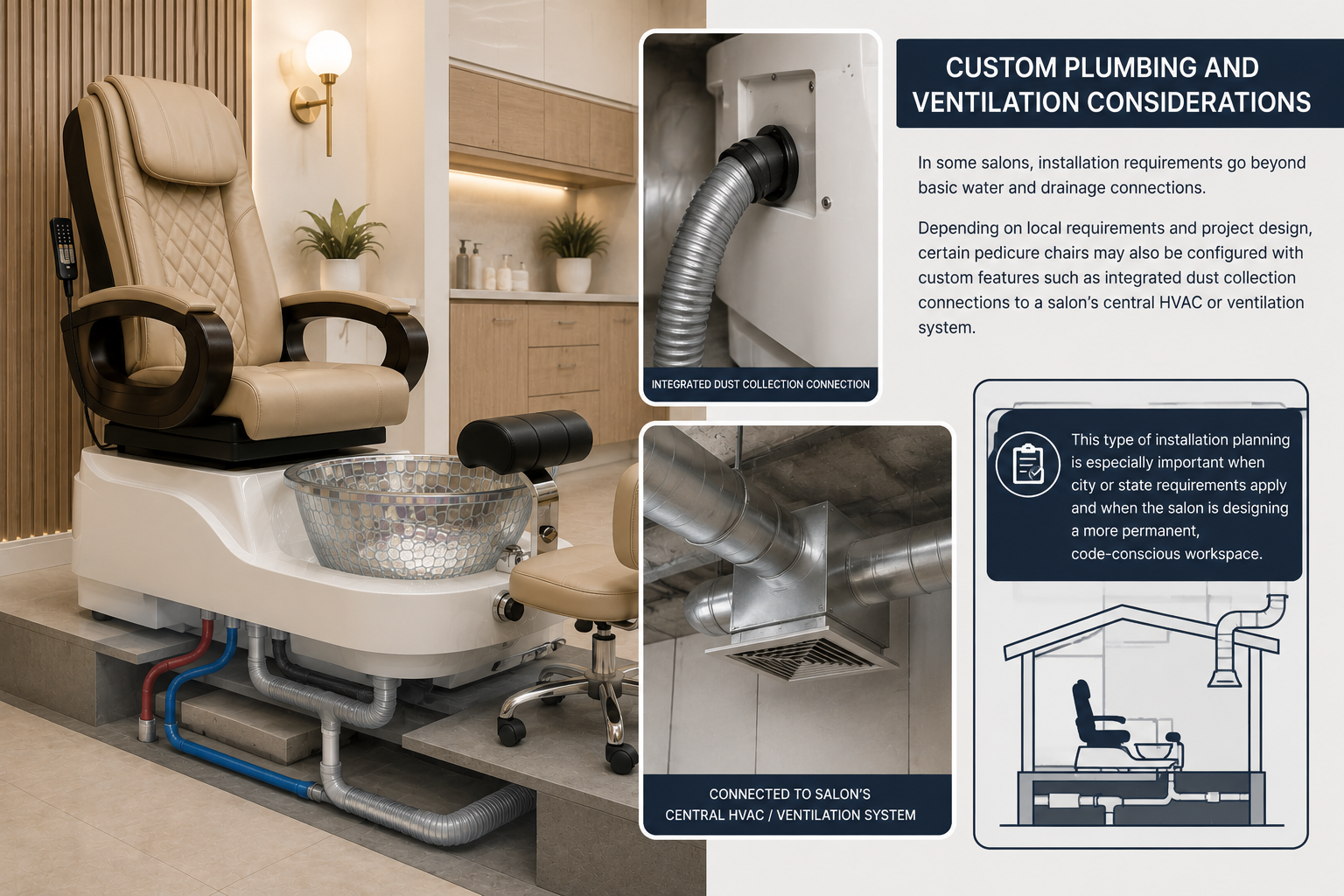
Custom Plumbing and Ventilation Considerations
In some salons, installation requirements go beyond basic water and drainage connections.
Depending on local requirements and project design, certain pedicure chairs may also be configured with custom features such as integrated dust collection connections to a salon’s central HVAC or ventilation system.
This type of installation planning is especially important when city or state requirements apply and when the salon is designing a more permanent, code-conscious workspace.
Questions to Ask Before Installing a Plumbed Pedicure Chair
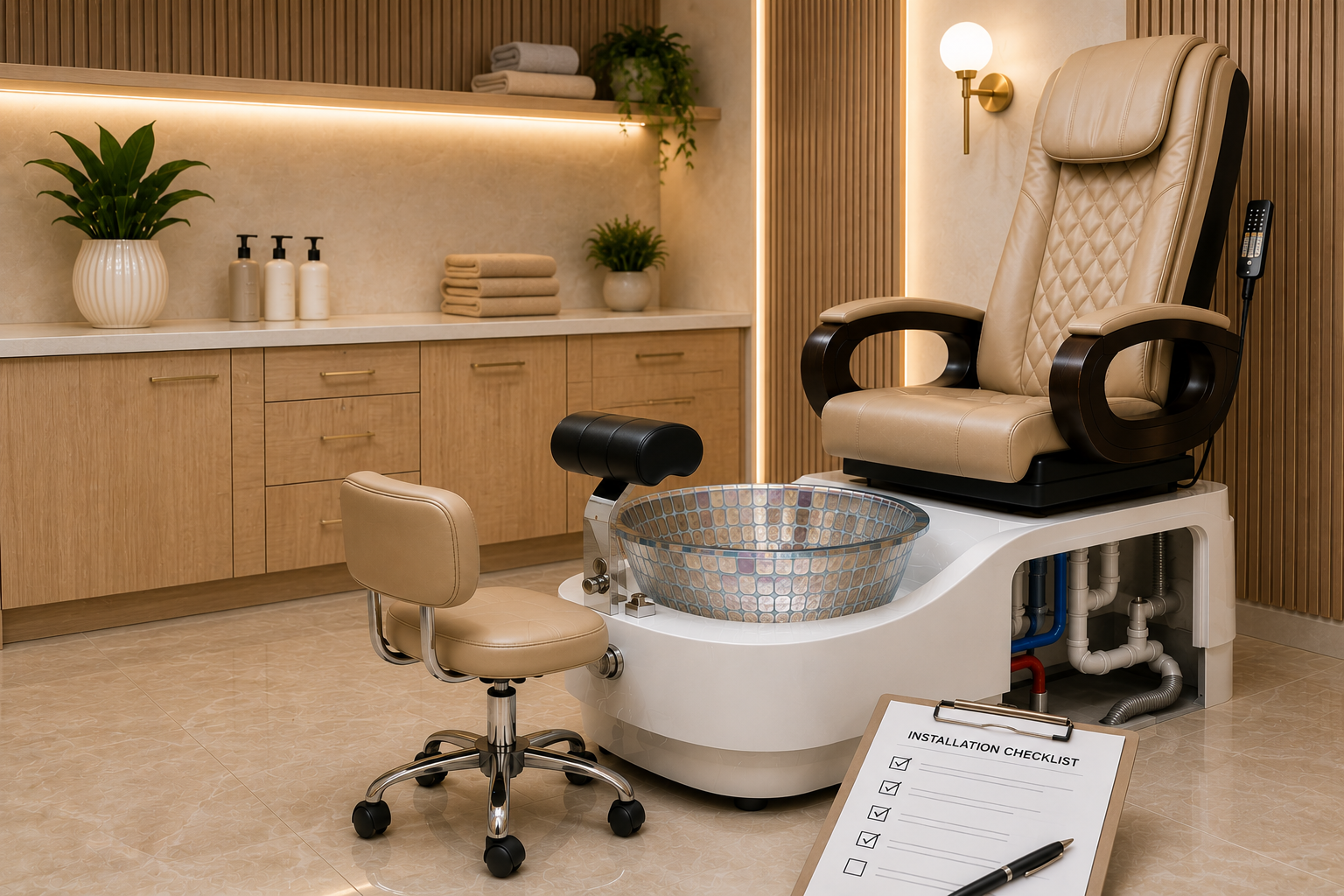
Before moving forward, it is helpful to ask:
- Is plumbing already available where the chair will be placed?
- Will the installation require wall access or floor cutting?
- Is the drainage method compatible with local code?
- Will permits or inspections be required?
- How easy will the system be to maintain later?
- Will this layout still work if the salon expands or changes?
These questions can help avoid expensive surprises.
Final Thoughts
Plumbing plays a major role in how a pedicure chair is installed, maintained, and used over time. It affects not only the initial setup, but also daily workflow, sanitation procedures, and future flexibility.
By understanding how plumbing fits into the overall pedicure chair system, salon owners and technicians can make better decisions about layout, installation, and long-term operation.