
Choosing between plumbed and non-plumbed pedicure chairs is one of the most important decisions when setting up or upgrading a pedicure station. Each system has its own advantages, installation requirements, sanitation considerations, and long-term maintenance implications.
Understanding these differences helps salon owners, nail technicians, spa operators, beauty schools, salon suites, and booth renters select the system that best fits their space, workflow, and budget.
For a broader overview of pedicure systems, see our Complete Pedicure Chair Guide.
What Is a Plumbed Pedicure Chair?
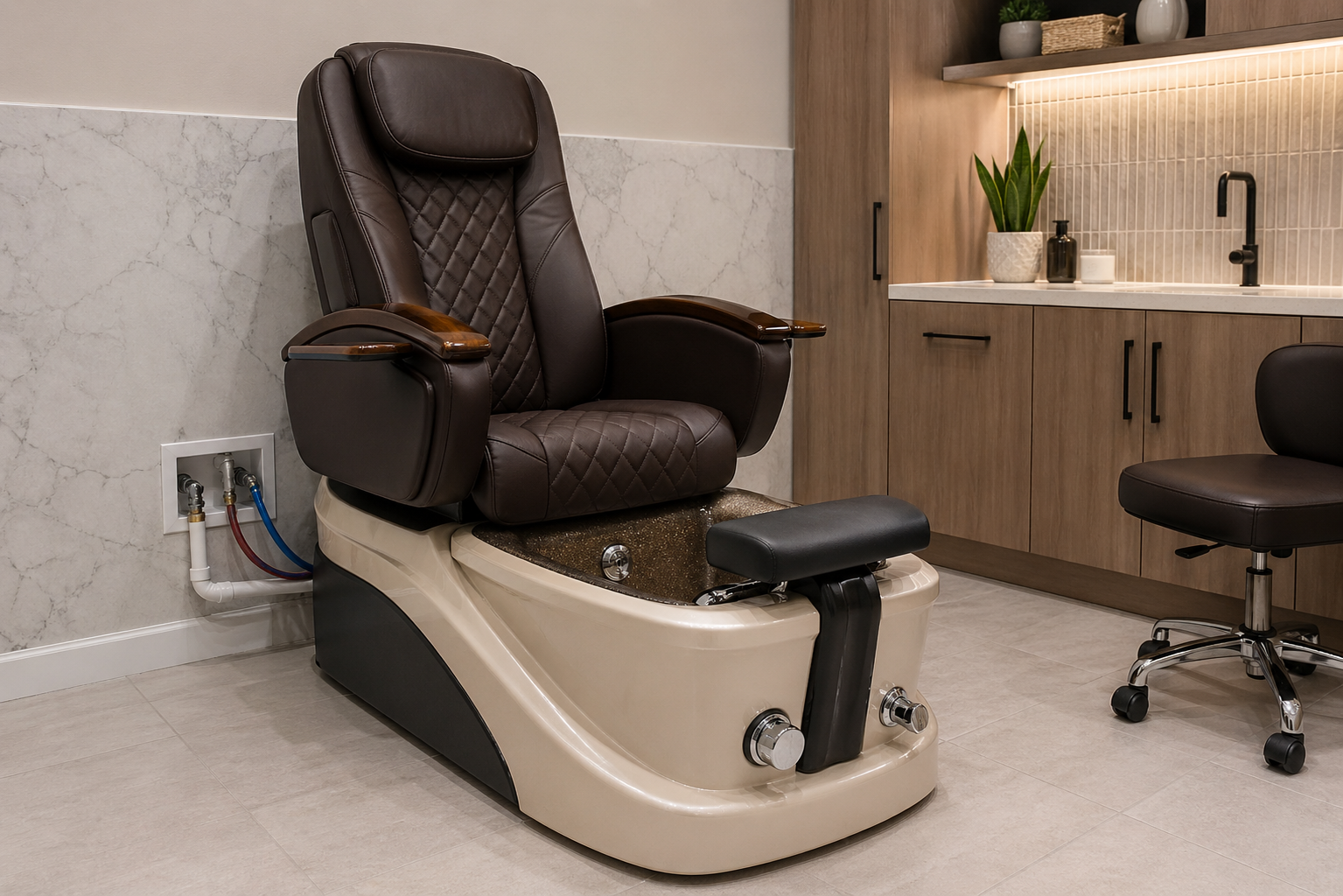
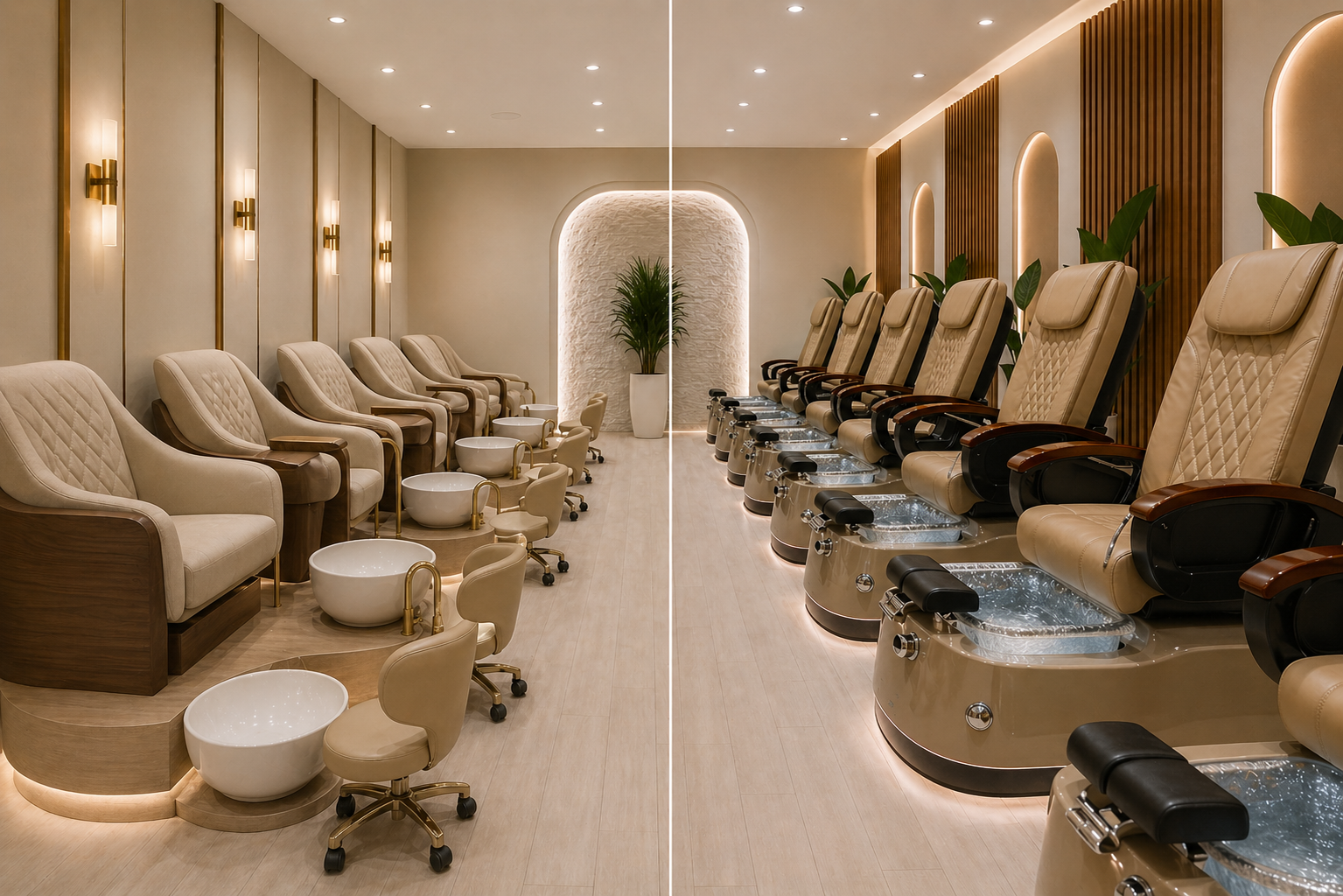
A plumbed pedicure chair connects directly to the building’s water supply and drainage system. Water flows continuously into the basin and drains through fixed plumbing connections.
These systems are commonly used in larger salons with permanent layouts and established infrastructure.
Key characteristics:
- Connected to water supply and drainage
- Fixed installation
- Often paired with jet or whirlpool systems
- Continuous water flow during service
What Is a Non-Plumbed Pedicure Chair?
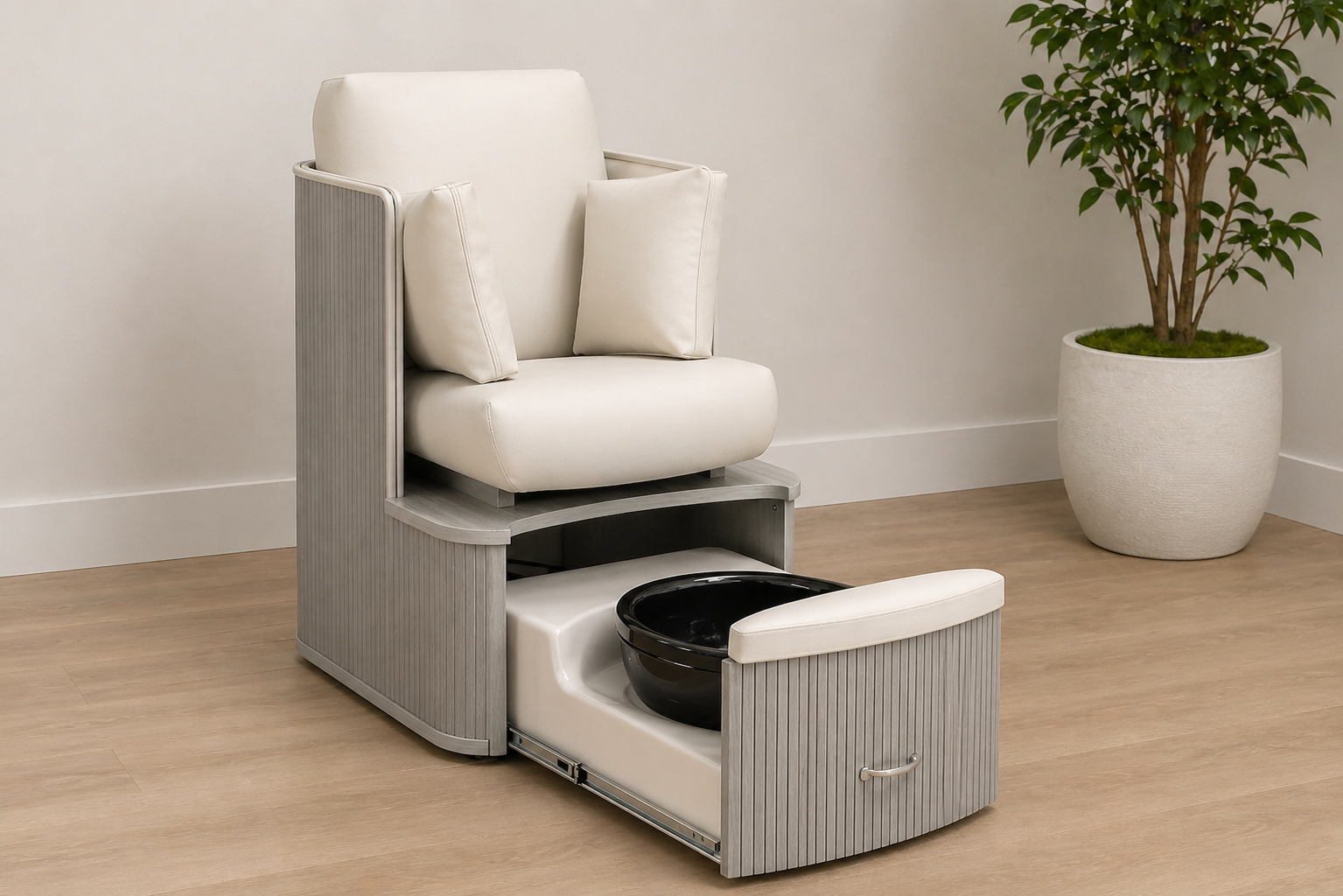
A non-plumbed pedicure chair operates without direct plumbing connections. Water is filled manually and drained after each service, often using removable bowls or integrated portable systems.
These systems are widely used in smaller salons, beauty suites, and training environments.
Key characteristics:
- No plumbing required
- Flexible placement
- Faster installation
- Often used with disposable liners
- Easier to relocate
Installation Differences
One of the biggest differences between plumbed and non-plumbed systems is installation.
Plumbed systems:
- Require water supply and drainage lines
- May need electrical connections
- Often require permits or inspections
- Installation can involve contractors
- May require floor modifications in older buildings
Non-plumbed systems:
- No plumbing installation required
- Minimal setup time
- Can be installed in almost any space
- Ideal for leased spaces or temporary layouts
Sanitation Considerations
Sanitation is a critical factor when choosing a pedicure system.
Plumbed and jet systems:
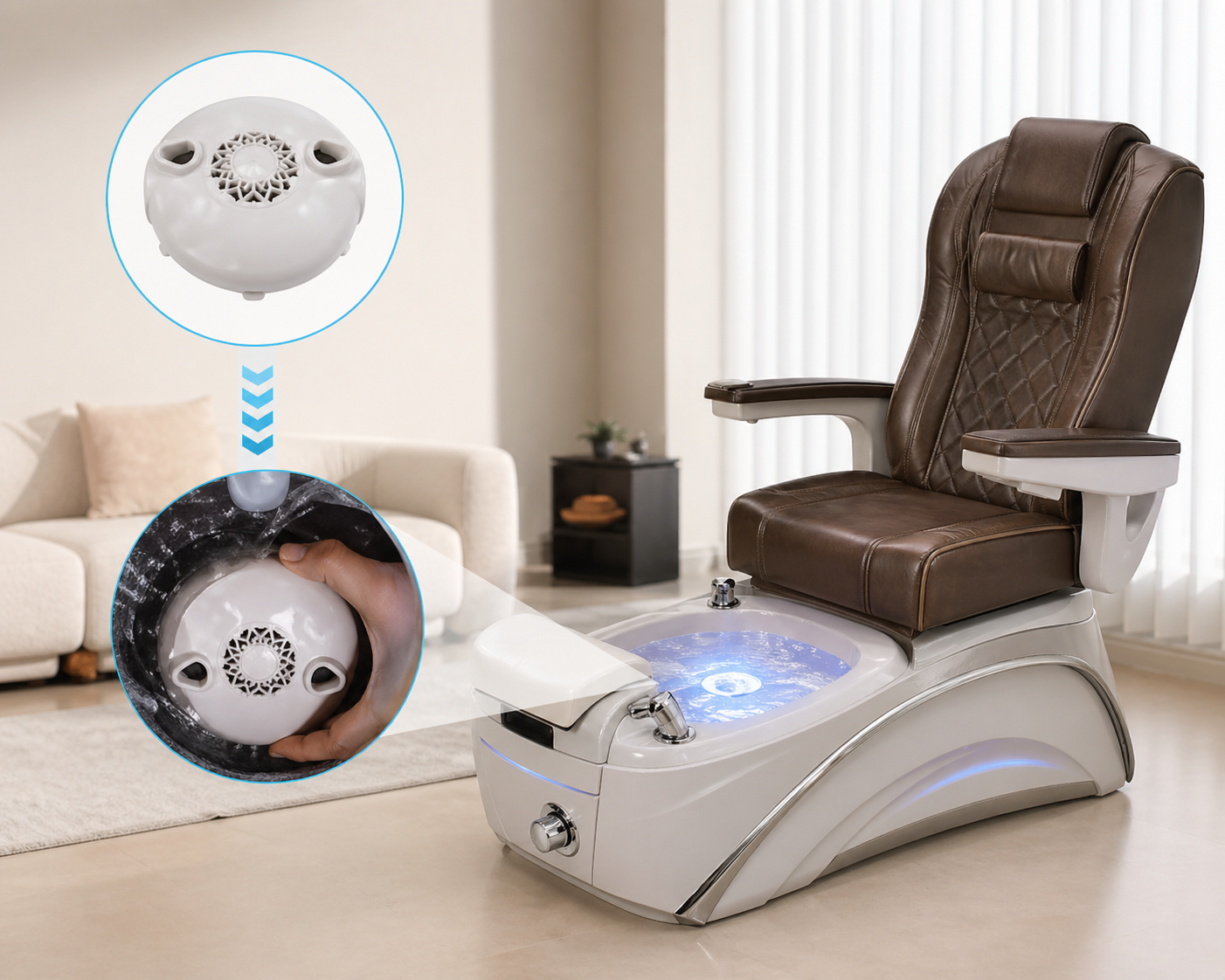
- Require thorough cleaning of pipes and internal components
- May involve more complex sanitation procedures
- Can require additional time between clients
Non-plumbed systems:
- Often use disposable liners
- Reduce risk of contamination between clients
- Simplify cleaning process
- Help maintain consistent sanitation standards
Maintenance and Long-Term Costs
Beyond installation, maintenance plays a major role in total cost of ownership.
Plumbed systems:
- More components (pipes, pumps, jets)
- Higher maintenance requirements
- Potential repair costs over time
- Longer cleaning time
Non-plumbed systems:
- Fewer mechanical components
- Easier to clean and maintain
- Lower long-term service complexity
- Reduced downtime
- Typically lower purchase price, installation cost, and overall cost of ownership

Flexibility and Salon Layout
Plumbed systems:
- Fixed in place
- Less adaptable to layout changes
Non-plumbed systems:
- Can be repositioned
- Adapt to changing layouts
- Ideal for small spaces and evolving businesses
Which System Is Right for You?
Choose plumbed if:
- You have existing plumbing infrastructure
- You are designing a permanent salon layout
- You want continuous water flow systems
- You have a secure long-term lease or are confident in lease renewal
Choose non-plumbed if:
- You want easier installation
- You need flexibility in layout
- You operate in a smaller space, suite, or as a booth renter
- You are restricted in making plumbing or structural modifications
- Sanitation is a primary concern and you prefer to avoid pipes and jet systems that require more time to clean properly
- You are starting your business and prefer to avoid investing in high-cost, permanently installed equipment
- You want to reduce contamination risk in pedicure soaking and maintain a higher level of hygiene for your clients
Final Thoughts
Both plumbed and non-plumbed pedicure chairs can provide excellent service when chosen correctly. The right decision depends on your space, budget, sanitation priorities, and long-term operational needs.
By understanding installation requirements, maintenance differences, and sanitation implications, you can select a system that supports both your business and your clients.