
Installing a pedicure chair involves more than placing equipment on the floor. Depending on the system you choose, installation may require plumbing, electrical work, permits, and layout planning.
Understanding these requirements before purchasing helps avoid unexpected costs, delays, and complications. It also ensures your pedicure station is set up safely, efficiently, and in compliance with local regulations.
This guide explains the key installation considerations for both plumbed and non-plumbed pedicure chairs.
Plumbed Pedicure Chair Installation
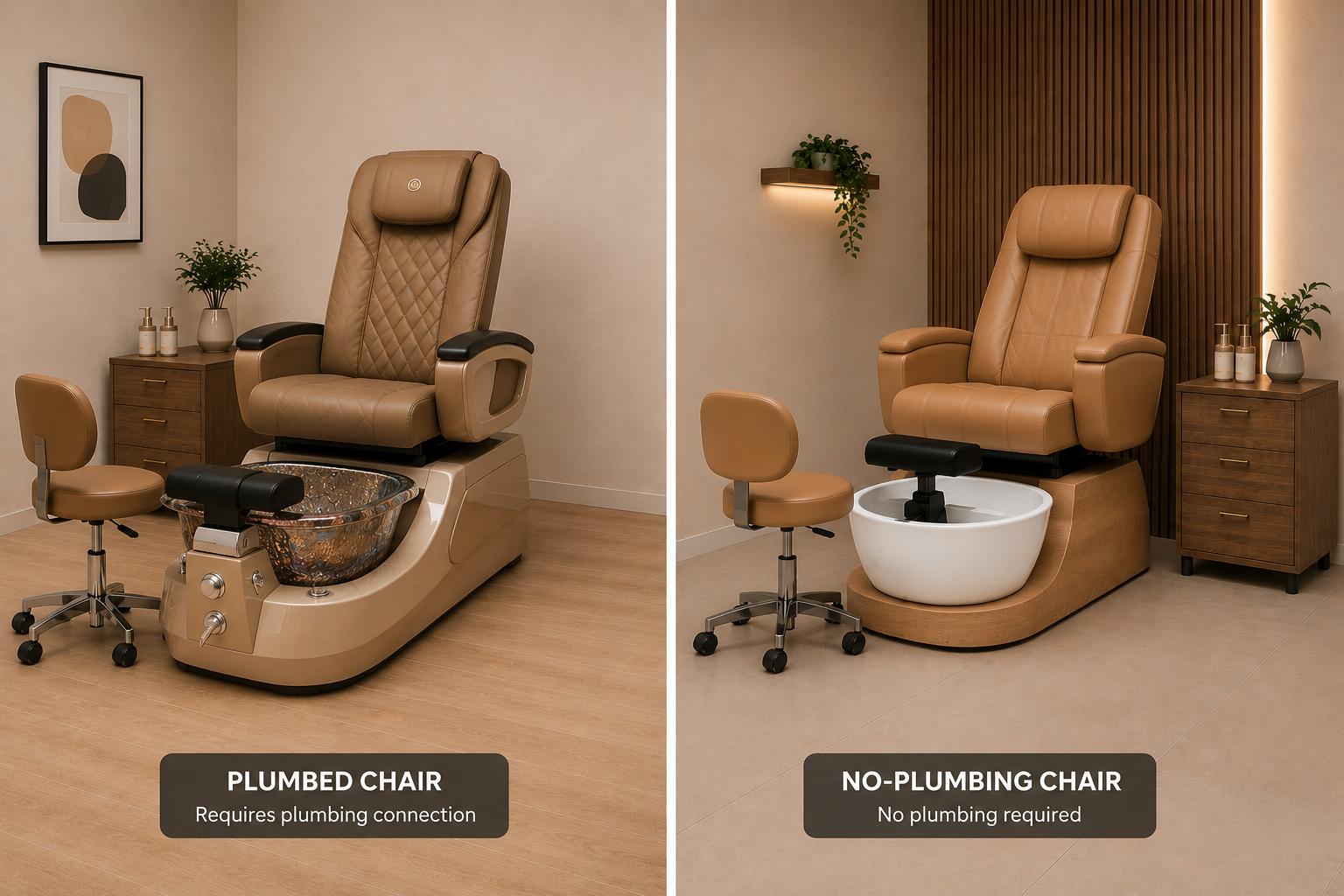
Plumbed pedicure chairs require connection to the building’s water supply and drainage system. These installations are typically permanent and involve more preparation.
Typical requirements:
- Hot and cold water supply lines
- Drainage connection to sewer system
- Electrical connections (depending on chair features)
- In many cases, professional installation by a licensed contractor or plumber is required; however, certain designs allow for simplified connection to existing plumbing without complex installation work. Learn more about plumbed pedicure chairs.
- In many cases, installation must comply with local building codes and may require permits and inspections.
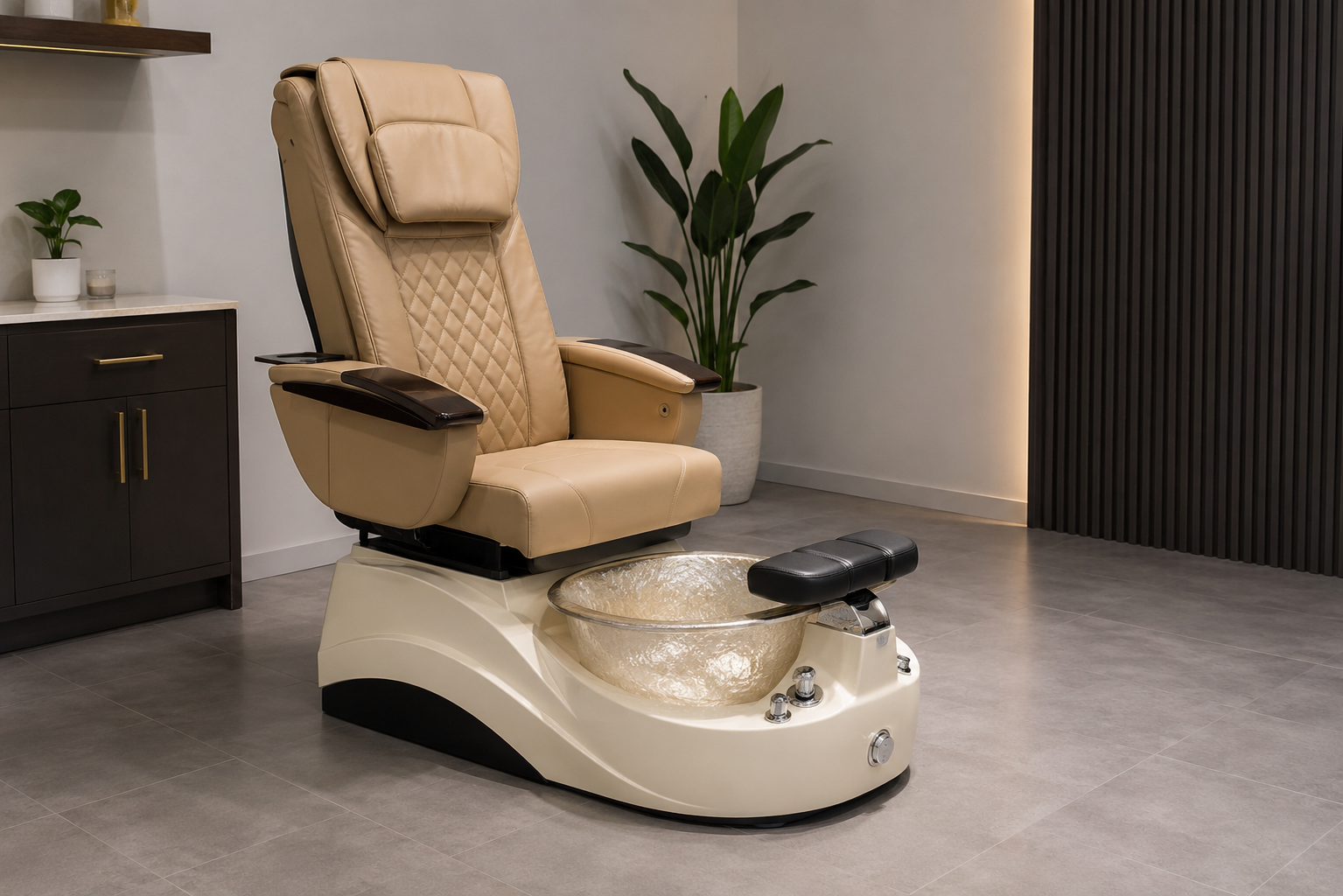
Non-Plumbed Pedicure Chair Installation
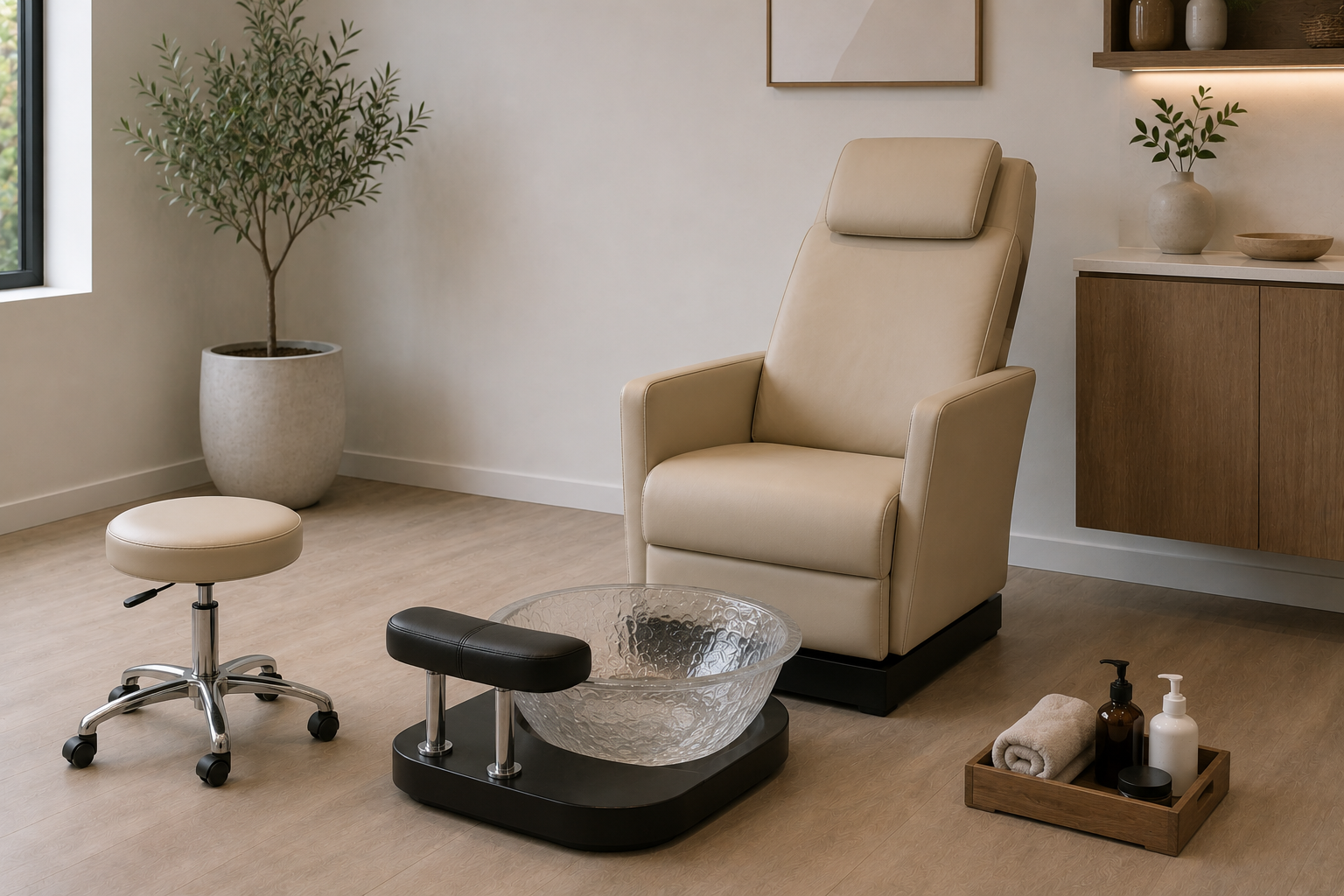
Non-plumbed pedicure chairs do not require direct plumbing connections and are significantly easier to install.
Typical requirements:
- Access to water for manual filling
- Drain method (manual disposal or portable drainage system)
- Standard electrical outlet (if applicable)
- Level floor space
These systems can usually be set up quickly and do not require construction work or permits.
Electrical Requirements
Some pedicure chairs include features such as:
- Massage systems
- Heated seats
- Integrated lighting or controls
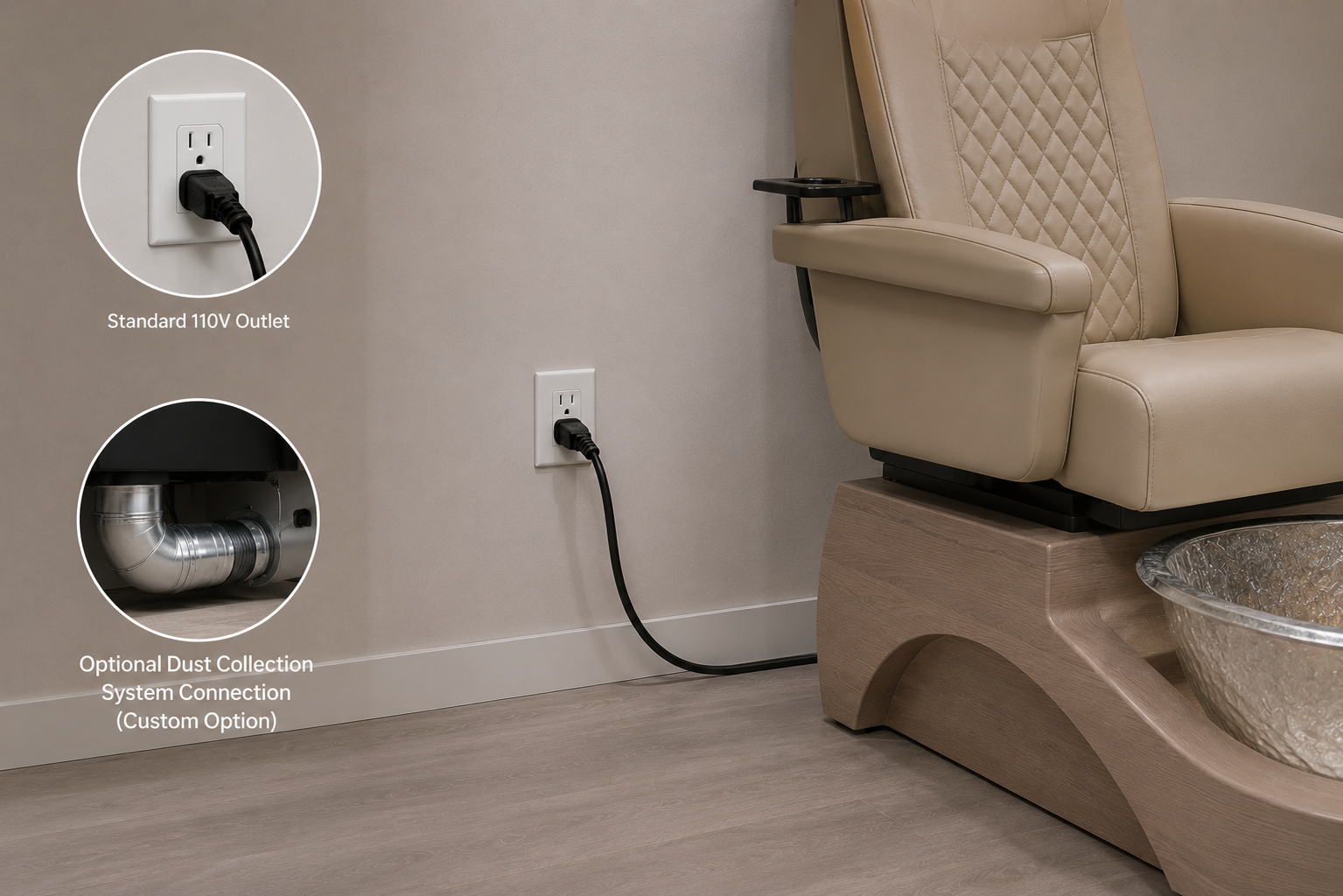
Depending on the model, these may require:
- Standard 110V outlet
- Dedicated circuit (in some cases)
It is important to confirm electrical requirements before installation to ensure compatibility with your space.
Space and Layout Planning
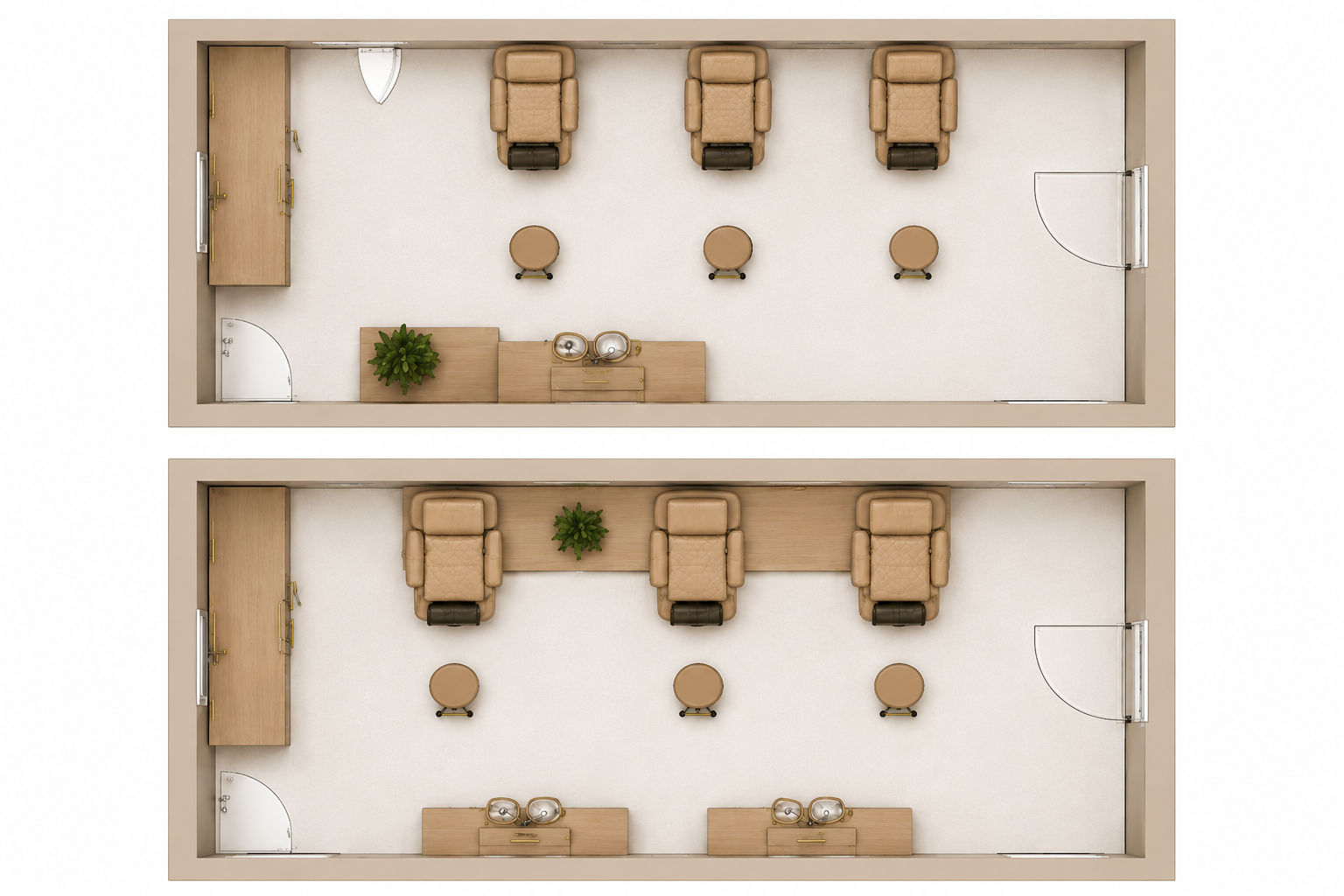
Proper layout planning is essential before installing pedicure chairs.
Consider:
- Distance between stations
- Client access and walking space
- Technician working area
- Placement of tools and equipment
- Accessibility and safety
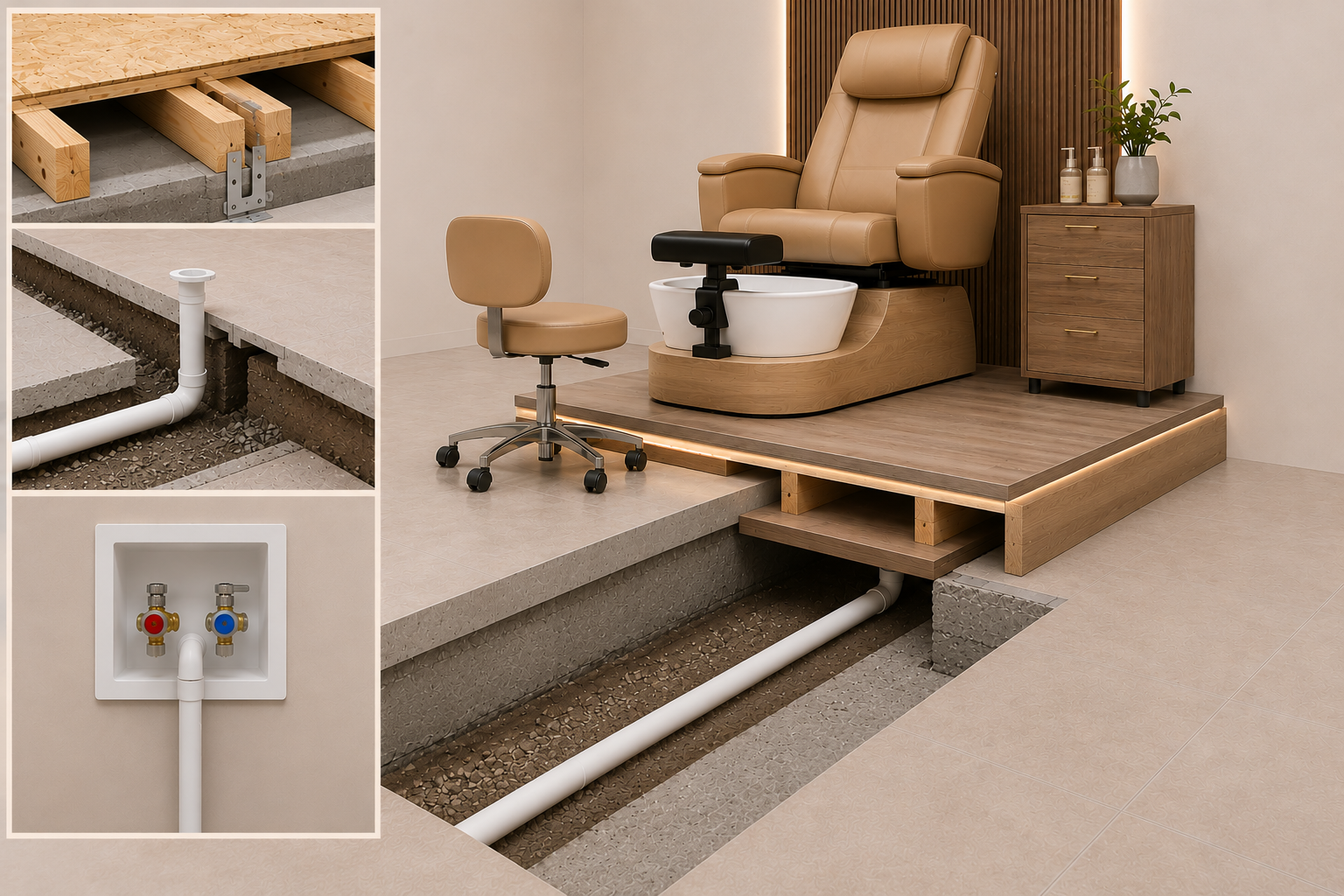
- Use of raised platforms (custom-built or pre-fabricated) to elevate the chair and client, helping improve technician ergonomics and reduce strain during service
- Pre-built raised platforms, such as those available from Belava, can be integrated into the setup to create a more comfortable and efficient working position for nail technicians
- Adequate lighting in the pedicure footrest area, positioned slightly forward and above the technician, so the technician’s shoulders do not block the light during service
In smaller salons, suites, or shared spaces, layout flexibility becomes especially important.
Floor and Structural Considerations
Floor and structural considerations may include:
- Reinforcing flooring if needed
- Cutting into floors to run plumbing lines and ensuring proper drainage slope (particularly in older buildings or new construction)
- Waterproofing around installation areas
- In many modern salon installations, pedicure chairs are connected to existing wall plumbing using standpipe-style drainage (similar to laundry hookups), eliminating the need for floor trenching; however, all connections should be designed in accordance with local plumbing codes and requirements
These factors can significantly impact installation cost and timeline.
Permits and Regulations
Plumbed installations often require:
- Building permits
- Plumbing permits
- Inspections
Requirements vary by city and state, so it is important to check local regulations before beginning installation.
Non-plumbed systems typically avoid these requirements, making them easier to deploy in leased spaces or temporary locations.

Installation Costs
Installation costs can vary widely depending on the system.
Plumbed systems may include:
- Plumbing labor
- Electrical work
- Permits and inspections
- Construction or floor modifications
Non-plumbed systems:
- Minimal installation cost
- No major construction
- Faster setup
Understanding these costs in advance helps avoid unexpected expenses.

Choosing the Right Installation Approach
Plumbed installation may be suitable if:
- You are building or remodeling a permanent salon
- You have access to plumbing infrastructure
- You plan long-term use of the space
Non-plumbed installation may be better if:
- You want quick setup
- You are working in a leased space
- You need flexibility in layout
- You want to avoid construction and permits
Final Thoughts
Installation requirements should always be considered before selecting a pedicure chair. The type of system you choose will directly impact setup time, cost, and long-term flexibility.
By planning ahead and understanding what is involved, you can create a pedicure station that fits your space, supports your workflow, and avoids unnecessary complications.